Archive

July 22, 2026

Browsing

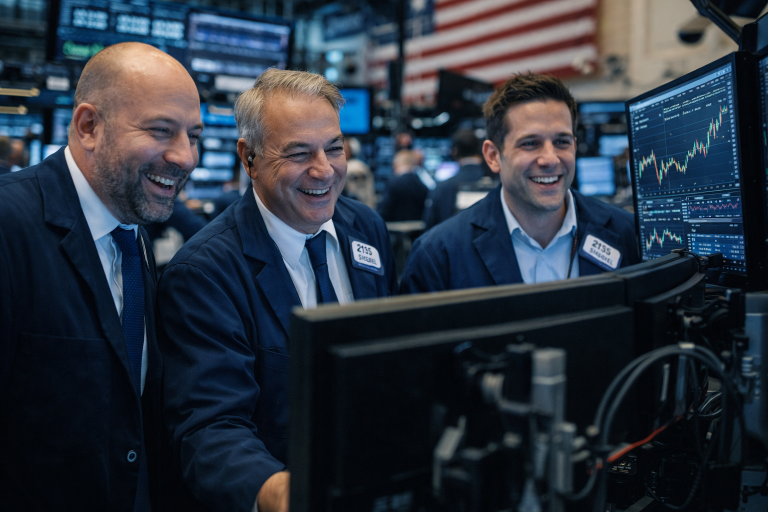
US stocks closed sharply higher on Tuesday, led by a strong rebound in semiconductor shares as investors looked past geopolitical tensions in the Middle East and focused on the upcoming wave of Big Tech earnings reports.

The Dow Jones Industrial Average rose 384.46 points, or 0.74%, to close at 52,223.72.

The S&P 500 gained 0.86% to 7,507.32, while the Nasdaq Composite climbed 1.26% to 25,829.61.

The rally came after a volatile start to the week, with investors balancing continued conflict between the United States and Iran, higher oil prices and new tariff announcements against expectations for another strong corporate earnings season.

Information technology stocks led gains among the S&P 500’s 11 sectors, while consumer staples lagged.

Semiconductor stocks rebound ahead of earnings

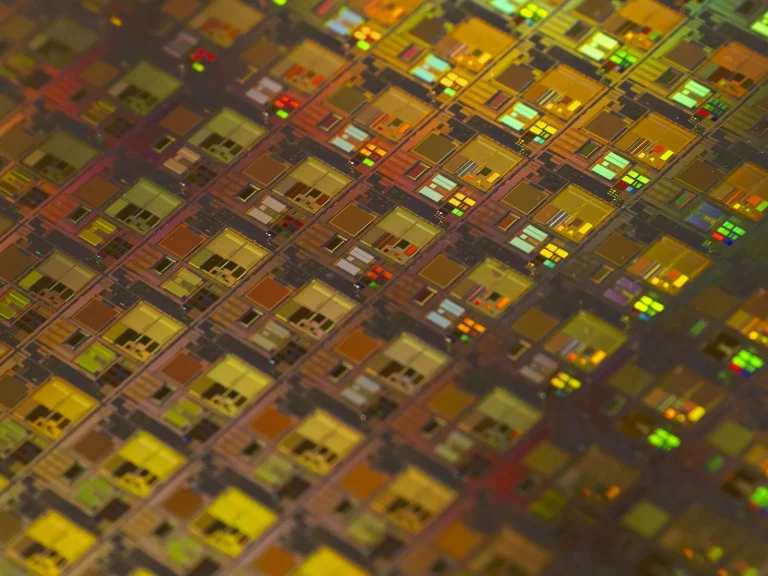
Chipmakers powered the broader market higher after suffering steep losses in recent sessions.

The VanEck Semiconductor ETF (SMH) gained 4%, while Micron Technology surged 12%. Intel advanced 8%, Marvell Technology climbed more than 6%, and Astera Labs added 3%.

The Philadelphia Semiconductor Index extended its recovery for a second straight session after ending last week more than 20% below its late-June record high, confirming a bear market.

Despite the recent correction, the index remains up nearly 75% for the year.

The rebound comes ahead of earnings from several major technology companies, including Alphabet, IBM, Intel, Tesla and Texas Instruments, with investors looking for updates on artificial intelligence spending and demand for semiconductor products.

The second-quarter earnings season has also started on a strong note.

According to FactSet, nearly 88% of the roughly 66 S&P 500 companies that have reported results have exceeded analysts’ earnings expectations.

Corporate earnings also lifted several individual stocks. Shares of 3M gained more than 7% after the company reported stronger-than-expected second-quarter results and raised its full-year profit outlook.

General Motors climbed 5% after beating Wall Street estimates for both revenue and earnings.

Meanwhile, Hasbro advanced after raising its annual revenue and profit forecasts, while Danaher, MSCI and Genuine Parts declined after issuing weaker outlooks or reporting disappointing results.

Iran conflict and tariffs remain in the background

Markets largely looked through ongoing geopolitical developments despite continued military activity in the Middle East.

US Central Command carried out its 10th consecutive night of strikes on Iran after President Donald Trump declared the ceasefire “over.”

Iranian forces continued attacks on US military assets in the region, while Yemen’s Iran-aligned Houthis threatened a blockade on commercial shipping in the Red Sea.

Reports also indicated that mediators have proposed a 10-day ceasefire between the United States and Iran.

Oil prices remained elevated throughout the session.

West Texas Intermediate crude rose about 2% to nearly $85 per barrel, while Brent crude traded around $91 after reaching five-week highs.

Two oil tankers carrying Saudi crude to Asia reportedly reversed course in the Red Sea following Houthi threats against commercial shipping.

Investors also assessed President Donald Trump’s announcement of 50% tariffs on a broad range of Canadian imports.

Despite concerns over trade and geopolitical risks, market attention remained centered on corporate earnings and the outlook for artificial intelligence investment as the technology sector prepares to report quarterly results.

The post Dow jumps 380 points as chip rally lifts Wall Street ahead of Big Tech earnings appeared first on Invezz

Silver can be expected to rise to the next resistance level 65.00 (former string support from February to June).

  • Silver reversed from long-term support level 55.00
  • Likely to rise to resistance level 65.00

Silver recently reversed up from the support zone set between the strong long-term support level 55.00 (former resistance from October and November, as can be seen from the daily Silver chart below) and the lower daily Bollinger Band. The upward reversal from this support area stopped the earlier short-term impulse wave v of the intermediate impulse wave C from the start of May. This intermediate impulse wave C is belongs to the longer-term downward ABC correction (2) from January.

Given the strength of the support level 55.00 and the bullish sentiment seen across the precious metals markets, Silver can be expected to rise to the next resistance level 65.00 (former string support from February to June).

The subject matter and the content of this article are solely the views of the author. FinanceFeeds does not bear any legal responsibility for the content of this article and they do not reflect the viewpoint of FinanceFeeds or its editorial staff.

The information does not constitute advice or a recommendation on any course of action and does not take into account your personal circumstances, financial situation, or individual needs. We strongly recommend you seek independent professional advice or conduct your own independent research before acting upon any information contained in this article.

Wall Street has a short memory for companies it has already written off. Once a stock gets labeled a lost cause, the label tends to outlive the facts, because updating a story takes more effort than repeating one.

Movie theaters have worn that label since 2020. The industry lost most of its audience during the Covid shutdowns, then lost a chunk of what came back to bigger televisions, shorter waits before a film hits streaming, and a subscription service in nearly every living room.

The standard analysis became a melting ice cube. Attendance drifts a little lower each year, chains close screens to protect margins, and the only real debate is how slowly the decline plays out.

That thesis has always carried one weakness inside it. Theater chains sit on enormous fixed costs, so the same math that punishes them in a weak year flips hard in the other direction the moment enough people actually show up.

Enough people showed up. AMC Entertainment (AMC) reported second-quarter results before the bell on Monday, July 20, and the company cleared a profit mark it had never reached in 106 years of operating.

Why movie-theater economics swing so violently

A theater chain is close to a pure fixed-cost business. Rent, insurance, projection equipment, and a baseline of staffing are all paid for, whether an auditorium holds 12 people or 120.

That is why exhibition looks dire in a weak year and looks like a different industry in a strong one. Every incremental ticket sold after the fixed costs are covered drops almost straight to the bottom line.

More Streaming:

The second quarter put hard numbers on that idea. Operating expense, excluding depreciation and amortization, landed at $458.4 million, matching the prior year to the decimal, while rent moved only from $222.6 million to $223.8 million, according to AMC’s second-quarter earnings release.

Revenue over that same stretch climbed by roughly $199 million.

I have covered enough exhibitor quarters to know that flat costs paired with rising revenue is the only combination that ever repairs a debt-heavy theater chain. Everything else is cosmetic.

AMC welcomed 52.5 million moviegoers in U.S. theaters during the second quarter of 2026.

Maskot / Getty Images

What AMC’s record second quarter actually delivered

Total revenues reached $1.597 billion, up 14.2%, and adjusted EBITDA hit $321.4 million, the first time the company has ever cleared $300 million in a single quarter, according to AMC’s earnings release.

Adjusted EBITDA is what is left after stripping out interest, taxes, and the accounting charge for aging assets, which makes it the number lenders watch most closely.

The gap against expectations was not subtle. Adjusted profit arrived at 14 cents per share against forecasts for a loss of 6 cents, with revenue estimates sitting at $1.47 billion, reported Reuters, citing LSEG data.

AMC chairman and chief executive Adam Aron did not undersell it. In 106 years, “never before has AMC had such superb results,” he said in the release.

Here is the AMC’s second-quarter earnings release at a glance:

  • Total revenue of $1.597 billion, up from $1.398 billion 
  • Adjusted EBITDA margin of 20.1%, up from 13.6% a year earlier
  • U.S. attendance of 52.5 million patrons, up 12%
  • International attendance up 17.9%, with segment adjusted EBITDA of $35.8 million
  • Free cash flow of $190.1 million, versus $88.9 million a year ago
  • Industry-wide domestic box office of roughly $2.99 billion, up 10.7%

Six separate films opened above $75 million domestically during the quarter, and Christopher Nolan’s “The Odyssey” followed with a reported $124 million debut in July, reported Reuters.

Notably, the average U.S. ticket price actually slipped to $12.70 from $12.77. The record came from volume, not from charging moviegoers more.

Management says that is deliberate. “We can grow our revenue per patron without necessarily increasing price,” chief financial officer Sean Goodman told analysts, according to TheWrap.

More than half of AMC’s U.S. guests during the quarter were Stubs loyalty members, according to The Wrap, which is the payoff.

The per share math behind AMC’s blockbuster numbers

Here is where my analysis parts ways with the celebration.

AMC survived the past six years by selling stock, repeatedly. Diluted weighted average shares outstanding hit 722.0 million in the second quarter, up from 433.1 million a year earlier, according to the earnings release.

That is 66.7% more owners splitting the same pie.

Related: AMC makes bold call that sends its stock crashing

I ran the record adjusted EBITDA figure against that share count, and the result reframes the quarter entirely. Adjusted EBITDA per share worked out to roughly 44.5 cents, against about 43.7 cents in the same quarter last year.

A 69.6% jump in adjusted EBITDA became a 1.7% gain per share.

The debt load absorbs most of the rest. Interest expense of $136 million consumed 57% of the $238.1 million in operating income, and stockholders’ equity remains negative at about $1.45 billion, the earnings release revealed.

Sell-side reaction reflected that split. “While there’s still more work to do here, this was a source of hope,” wrote B. Riley Securities analyst Drew Crumb, according to Deadline.

Others stayed skeptical about the durability of the turn. “Strong quarters, like this one, will happen now and again,” said eMarketer senior analyst Ross Benes, Reuters reported.

What the rest of 2026 decides for AMC investors

The near-term calendar is the bull case. Aron pointed to “Spider-Man: Brand New Day” arriving in two weeks, with “Dune: Part Three” and “Avengers: Doomsday” landing before Christmas.

The balance sheet has bought time to find out whether that slate delivers. AMC pushed its next meaningful debt maturity out to 2029 and expects lower borrowing costs to trim roughly $51 million more from annual interest expense if current conditions hold, the earnings release confirmed.

Analysts have started to move. Texas Capital upgraded the stock to buy and lifted its target to $3 from $2, according to TipRanks.

For anyone holding shares, the question for the second half is narrower than it looks. It is not whether the box office recovers, because the second quarter settled that.

It is whether AMC can go a full 12 months without issuing more stock. Do that, and the fixed-cost math finally works for existing shareholders instead of for the next round of buyers.

Fail, and 2026 becomes one more record the owners of this company never got to keep.

Related: AMC plans free perk for loyal customers amid struggles

Why Is TSMC Raising Chip Prices in 2027?

TSMC’s planned 2027 price increase is not simply another semiconductor supply-chain story. It changes the cost base behind AI accelerators, servers, smartphones and data-center budgets built using today’s wafer prices.

The world’s largest contract chipmaker plans to raise production prices by as much as 10% from the start of 2027, according to Nikkei Asia. The increase is intended to offset higher materials and equipment costs and the expense of building plants outside Taiwan. Base increases will range from 5% to 10%, depending on the customer and product, while mature processes including 12-nanometer, 16-nanometer and 28-nanometer production could rise by as much as 10%. Negotiations began in June and concluded in July.

Customers seeking high-performance computing capacity above their original forecasts could face a further 10% to 15% premium, creating a second price tier for late or incremental AI orders. That surcharge would sit on top of the standard increase rather than apply to every HPC order.

How Is TSMC Protecting Its Margin?

TSMC declined to confirm specific prices when contacted by Reuters.

“Our pricing strategy is strategic, not opportunistic,” a spokesperson said, adding that the company would continue working with customers and “sell our value to them.”

This is not an emergency increase from a producer struggling to make money. TSMC reported a record 67.7% gross margin in the second quarter. Yet overseas factories diluted profitability, while its 2026 capital spending budget rose to between $60 billion and $64 billion as it expands advanced production capacity.

That capacity is difficult for customers to replace. Advanced technologies, defined by TSMC as 7 nanometers and below, accounted for a record 77% of wafer revenue in the second quarter. Nvidia, AMD, Apple and Qualcomm all rely on TSMC for important products, giving the foundry leverage as AI chip designers, smartphone suppliers and custom-silicon developers compete for advanced production.

TSMC’s US-listed shares rose more than 3% before Tuesday’s opening bell as investors treated higher prices as protection for the company’s margins rather than a threat to demand.

Investor Takeaway

TSMC is using its manufacturing position to move part of its cost inflation downstream. For investors, the price hike is a margin-defense story at TSMC and a cost-pressure story for chip designers, cloud firms and AI infrastructure buyers.

Which Customers Can Pass On the Higher Cost?

The first invoice goes to chip designers, but the final cost will be spread unevenly.

Nvidia and AMD are best placed to pass higher wafer costs to server manufacturers, cloud providers and enterprises. Demand for AI accelerators remains strong, and the chip represents only part of a complete data-center system. A mid-single-digit wafer increase would not require an equal percentage increase in the price of a server, but it would raise the minimum return expected from every deployed GPU cluster.

Apple has less room to make the increase visible. It can raise premium device prices, negotiate savings elsewhere in the bill of materials or accept a smaller hardware margin. Qualcomm can push some costs to handset manufacturers, although price-sensitive Android markets make full pass-through harder.

Cloud companies and AI developers sit at the end of the chain. They could pay through higher accelerator prices, more expensive server leases or slower declines in computing costs. Customers that underestimated their 2027 capacity needs face the greatest exposure because the reported HPC surcharge sits on top of the base increase.

What Does the Price Hike Mean for AI Economics?

The price increase raises the cost floor for AI infrastructure before the next wave of capacity is even built. AI budgets for 2027 were modeled around today’s wafer costs, current accelerator pricing and expected declines in compute costs. TSMC’s planned hike changes that baseline.

For Nvidia and AMD, the impact may be manageable if demand remains firm and customers keep paying for advanced accelerators. For cloud providers, the issue is more direct. Higher chip costs can flow into server capital expenditure, lease pricing and the economics of offering AI compute at scale.

The reported surcharge for additional HPC orders also changes the planning equation. Companies that lock in capacity early may avoid the worst of the premium. Those that need incremental AI supply above original forecasts could face higher marginal costs just as competition for advanced manufacturing capacity remains tight.

Investor Takeaway

The key question is not whether Nvidia, AMD, Apple and Qualcomm pay more for wafers. It is how much of that increase moves through the chain before customers delay upgrades, cut orders or demand cheaper AI computing.