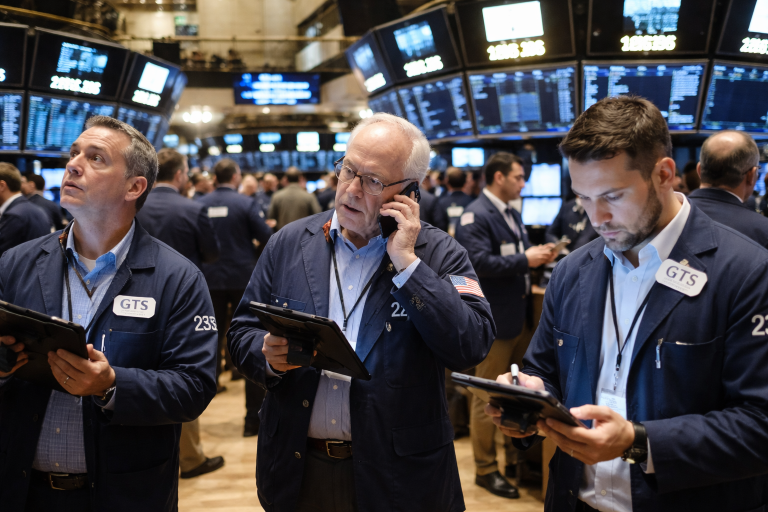
US stocks closed lower on Friday, capping a weak week for Wall Street as a deepening selloff in semiconductor stocks and renewed concerns over artificial intelligence spending weighed on investor sentiment.
The decline came despite a strong start to the second-quarter earnings season, with rising geopolitical tensions in the Middle East adding to market uncertainty.
The Dow Jones Industrial Average fell 394 points, or 0.75%, to close at 52,158.96.
The S&P 500 declined 1.01% to 7,457.78, while the Nasdaq Composite dropped 1.40% to 25,511.12.
For the week, the S&P 500 lost more than 1%, the Nasdaq fell over 2%, and the Dow slipped nearly 1%.
Semiconductor stocks lead market lower
Technology shares remained under pressure as investors continued to reassess the sustainability of the artificial intelligence investment boom that has fueled markets over the past year.
The VanEck Semiconductor ETF (SMH) fell more than 8% for the week, marking its third weekly decline in four weeks.
The Philadelphia Semiconductor Index recorded its steepest weekly loss in more than a year and has fallen nearly 18% so far in July, although it remains up about 65% year to date.
The announcement added to concerns that increasing competition could reduce future demand for advanced AI chips and moderate the pace of technology spending.
The weakness in chipmakers eventually spread across the broader market as investors trimmed exposure to AI-related stocks.
Although equity markets finished the week lower, the second-quarter earnings season has started on a positive note.
According to LSEG, 49 S&P 500 companies have reported results so far, with 90% exceeding analysts’ expectations.
Analysts now expect aggregate second-quarter S&P 500 earnings growth of 26%, up from projections of 19.2% at the beginning of April. Strong bank earnings earlier in the reporting season have helped lift overall expectations.
Economic data released on Friday presented a mixed picture.
Consumer sentiment improved to a five-month high in July, while industrial production edged up 0.1%. However, single-family housing starts and building permits both declined.
Middle East tensions lift energy stocks and oil prices
Investors also monitored escalating geopolitical tensions after the United States and Iran continued military strikes across the Middle East.
The renewed conflict has disrupted energy flows through the Strait of Hormuz, a key global oil shipping route, supporting higher crude prices.
US West Texas Intermediate crude traded above $81 per barrel, while Brent crude remained above $86.
The rise in oil prices helped energy stocks outperform the broader market, making the sector the strongest performer within the S&P 500 during Friday’s session.
The comforting story about SpaceX stock is that Thursday’s aborted Starship launch was just an engineering hiccup and the dip is a buying opportunity. Both halves might be true, but the framing misses what actually changed: for the first time in SpaceX’s history, a routine test-flight abort — the kind that happened repeatedly before the IPO with zero financial consequence — is now a market event that erased billions in public-market value. SPCX trades near $125.40 as of July 17, 2026 (MarketBeat), below its $135 IPO price and down 18.5% since the June debut, after the company scrubbed its 13th Starship flight when four Super Heavy engines failed to ignite. The analyst spread on the same stock runs from CFRA’s $115 bear case to Raymond James’ $800 bull case — a seven-fold range that is the widest we have tracked across this entire bull-versus-bear series.
That $115-to-$800 spread is the story, because it is not a disagreement about a quarter — it is a disagreement about what SpaceX is. Having mapped this series across HIMS, Ethereum and the AI-infrastructure names, SPCX is the cleanest case yet of a private-market valuation dream colliding with public-market price discovery in real time. In the private secondaries, SpaceX was marked toward a $3 trillion-plus valuation on the promise of Starlink and Starship; in the public tape, retail that bought the hype above $200 is capitulating, and a crypto prediction market’s odds of SPCX closing July higher collapsed from 61% to 32% in days, per Benzinga. The abort did not change the engineering. It changed who sets the price — and that transfer, from patient private capital to daily public sentiment, is the real event.
Key Facts:
• SPCX trades near $125.40 (July 17, 2026), below its $135 IPO price and down 18.5% since the June 12 debut — MarketBeat, CNBC
• Average 12-month target: ~$234–$244 across 32–37 analysts, a Moderate-to-Strong Buy consensus (24 Buys) — MarketBeat, TipRanks
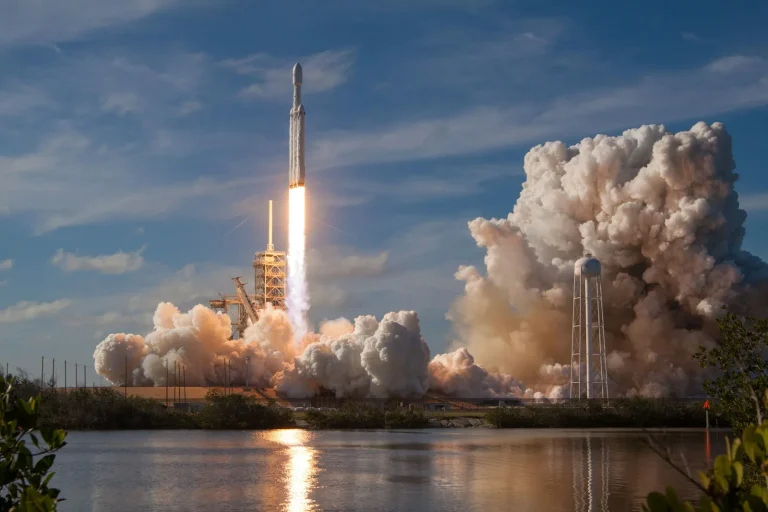
• Starship Flight 13 aborted July 16 when four Super Heavy engines failed to ignite; two Raptors will be replaced — Euronews
• Crypto prediction-market odds of SPCX closing July higher fell from 61% to 32% — Benzinga
• SPCX was added to the Nasdaq-100 in early July, then fell below its debut price in a multi-day slide — CNBC
What’s actually happening: the first launch as a listed company
Flight 13 was the first Starship test since SpaceX became a public company, and that context turned a familiar engineering ritual into a governance-grade event. The launch window opened at 5:45 p.m. Texas time on July 16; the automatic abort fired before liftoff when the Super Heavy booster’s startup sequence left at least four engines unlit. The safety system did exactly what it is built to do — too few engines is a scrubbed launch, not a failed one — and pre-IPO, that distinction was academic to anyone but engineers. Post-IPO, it printed red on a Nasdaq-100 component.
Elon Musk narrated the abort in real time. “Some of the engines didn’t start, triggering an automatic launch abort. Now offloading propellant. Next launch attempt hopefully in a few days,” he posted, following up with the fix: “To be confident of a good flight, 2 Raptors will be removed & replaced. Most probable launch timing is early next week.” (Euronews) In hardware terms, replacing two Raptor engines and retrying within days is a routine turnaround. In market terms, it extended a six-day losing streak and pushed the stock further under its offer price — the disconnect FinanceFeeds flagged the moment the listing priced, in why Wall Street couldn’t let SPCX fall.
The deeper shift is temporal. SpaceX’s development culture is built on rapid iterative failure — blow up early prototypes, learn, refly — a cadence that made it the most capable launch provider on Earth precisely because aborts and explosions carried no financial penalty. A public listing attaches a daily price to every one of those events. The company that thrived on visible failure now answers to a market that punishes it.
Industry response: the valuation-versus-revenue argument goes public
The most consequential response is not from an institution but from the retail base now setting the marginal price. The prediction-market collapse from 61% to 32% is one signal; the capitulation on trading forums is louder. The single most-upvoted SPCX post this month is a retail investor documenting a $200,000 loss on the stock, with the top reply — 2,075 upvotes — pointing at the core bear thesis: “Crazy that people knew the insanely bloated valuation but still went long.” Another widely-shared comment did the math that anchors the skeptics: “when you see valuation of 3T and they only make like 50b off Starlink.” That is the entire bear case in one sentence — a spacefaring monopoly priced as though Starlink’s revenue already justified a multi-trillion-dollar market cap.
Institutional desks are, remarkably, on the opposite side. Of roughly 32 to 37 covering analysts, the consensus is a Buy, with Raymond James at $800, Arete Research at $401, Deutsche Bank at $255, Needham at $250 and Morgan Stanley at $225 — an average near $234–$244 that implies more than 85% upside from the July price. Only CFRA ($115) and Moffett Nathanson ($131) see downside from here. This is the mirror image of the HIMS setup we broke down in the $40-versus-$21 bull/bear case: there, the market price had run above the analyst average and the street was upgrading from behind; here, the market has fallen below the entire target range and the street is standing pat, insisting the tape is wrong. When retail and the sell side diverge this violently on a Nasdaq-100 name, one of them is about to be repriced.
The numbers: $800 bull, $115 bear, a seven-fold spread
Scenario
Target
vs $125 price
Anchor
Extreme bull
$800
+398%
Raymond James — full Starlink + Starship optionality
Bull
$401
+220%
Arete Research
Street average
~$234–$244
+87% to +95%
32–37 analysts, Moderate/Strong Buy
Cautious
$225
+80%
Morgan Stanley
Bear
$131
+5%
Moffett Nathanson
Extreme bear
$115
−31%
CFRA
Sources: MarketBeat and TipRanks analyst compilations (July 17, 2026). Table compiled July 17, 2026.
The synthesis no single target reveals: the SPCX spread is not just wide, it is the widest in this series — a seven-fold range from $115 to $800 on one stock, versus the roughly ten-fold on OKLO, but on a company already generating real Starlink revenue rather than a pre-revenue reactor. When we deconstructed OKLO’s $140-versus-$14 split, the disagreement was about whether a technology would work at all. SPCX’s disagreement is subtler and more dangerous for holders: everyone agrees the technology works — Falcon 9 is the most reliable rocket in history and Starlink is a genuine business — the fight is entirely about the multiple. A spread this wide on a proven operator means the market has no shared framework for valuing it, and stocks without a shared valuation framework trade on flows and sentiment, not fundamentals. That is precisely why a launch abort moved it. Until an earnings cadence gives the market a number to anchor on, every Starship event — success or scrub — will swing the price more than the underlying business warrants.
There is a crypto-native footnote to the price discovery that is more than a curiosity. Before SPCX ever traded on Nasdaq, tokenized SpaceX proxies on venues like Gate and pre-IPO platforms were already quoting the company, and those synthetic markets ran hot into the debut — FinanceFeeds documented how the SpaceX IPO crushed every tokenized stock on day one and how crypto rails priced SPCX toward $2.3 trillion first. Those same 24/7 markets are now the leading indicator on the way down: the Benzinga-cited prediction market repricing from 61% to 32% is exactly the kind of continuous, capital-backed sentiment gauge that traditional equity markets lack between earnings dates. For a stock whose fair value nobody agrees on, the prediction markets are functioning as the real-time consensus the analyst PDFs cannot provide — and right now that consensus is bearish into month-end.
The regulatory and structural layer: index flows meet founder control
Two structural forces now pull against each other. On one side, the early-July Nasdaq-100 inclusion forces passive index funds to hold SPCX regardless of valuation — a mechanical bid that should dampen downside. On the other, the same inclusion means every index-tracking retirement account is now exposed to a stock whose price reacts to rocket-engine ignition sequences, a concentration of idiosyncratic risk that has drawn scrutiny given SpaceX’s dual-class structure and Musk’s concentrated control. The tension is the governance version of the innovation-versus-caution push-pull: index membership demands the stability of a blue chip, while the company operates with the risk appetite of a venture-stage moonshot.
There is a live regulatory subplot too. Reporting that SpaceX may direct stock toward federal children’s savings accounts, alongside the company’s deep government-contract entanglement (NASA, the Space Force, and Starlink’s defense business), keeps SPCX in a category few Nasdaq-100 names occupy: a listed equity whose largest customer and primary regulator are frequently the same US government. For institutional allocators, that is both a moat and a headline risk — the kind of dual-use exposure that widens, rather than narrows, the plausible valuation band.
What happens next: three scenarios into the relaunch and August
Prediction one — the relaunch is the near-term binary. Musk targets “early next week” for the retry; a clean Flight 13 that reaches its Starlink V3 deployment objective likely snaps the six-day losing streak and lets the stock reclaim its $135 IPO line, because the abort narrative reverses fastest when the very next attempt succeeds. A second scrub does the opposite, hardening the “priced for perfection, delivering delays” story that the sub-IPO price already reflects.
Prediction two — August earnings are the settlement date, and the bar is brutal. As one retail skeptic framed it, the market wants to see whether a company with “high dollar expenses” can justify the multiple when the first public earnings arrive. Expect the print to matter more than any launch: it will hand the market its first real number to anchor the $115-to-$800 spread, and the spread will compress hard toward whichever end the Starlink margin trajectory supports.
Prediction three — the analyst-versus-retail gap resolves toward the middle, not the extremes. The street’s $234 average will drift down as targets get marked to the tape, while the retail capitulation overshoots and creates the bounce; the likeliest 2026 path is a stock that spends months proving it deserves a number between Moffett’s $131 and Morgan Stanley’s $225, with each Starship flight a volatility event around that grind. SpaceX will keep being the most important private company to go public in a generation — and, for now, the clearest live experiment in what happens when a valuation built in the private markets has to be defended, launch by launch, in the public ones.
FAQ
Why did SpaceX stock (SPCX) fall below its IPO price?
SPCX slid below its $135 IPO price for the first time in mid-July 2026 and traded near $125 by July 17, down 18.5% since the June debut. A six-day losing streak, the aborted Starship Flight 13, and a broad view that the IPO priced in a multi-trillion-dollar valuation the revenue does not yet support all compounded the decline.
What is the bull case for SpaceX stock?
Raymond James’ $800 target is the extreme bull anchor (+398%), with a street average near $234–$244 implying more than 85% upside. The case rests on Starlink’s subscriber and revenue growth plus Starship optionality — reusable heavy-lift enabling everything from satellite deployment to lunar and Mars logistics.
What is the bear case for SpaceX stock?
CFRA’s $115 target (−31%) is the published bear floor. The thesis: a roughly $3 trillion implied valuation against Starlink revenue estimated near $50 billion is unjustifiable, index inclusion forces holders into idiosyncratic launch risk, and every Starship scrub now carries a financial penalty it never did privately.
What happened at the SpaceX Starship launch on July 16?
SpaceX aborted Starship Flight 13 before liftoff when four Super Heavy engines failed to ignite and the automatic safety system scrubbed the attempt. Elon Musk said two Raptor engines will be replaced and targeted a relaunch “early next week.” It was the first Starship test since the IPO.
Is SpaceX stock a buy after the drop?
Wall Street says yes — a Moderate-to-Strong Buy consensus with 24 Buys and ~87% average upside. The market disagrees, having pushed the price below every target but two. The $115-to-$800 spread means there is no consensus framework; the August earnings print and the Flight 13 relaunch are the near-term catalysts that will narrow it.
Does a launch abort really matter to SpaceX’s business?
Operationally, no — replacing two Raptor engines and reflying within days is routine, and pre-IPO these events carried no financial cost. The change is structural: as a Nasdaq-100 component, SpaceX now attaches a daily public price to a development culture built on rapid, visible failure, so aborts move the stock far more than they affect the underlying company.
What is SPCX’s price target range?
$115 (CFRA) to $800 (Raymond James), with a ~$234–$244 average across 32–37 analysts — a seven-fold spread, the widest in FinanceFeeds’ bull/bear series, reflecting deep disagreement over how to value a proven space monopoly with early public-market revenue disclosure.
A parasite that causes prolonged bouts of watery diarrhea has been spreading across parts of the Midwest, sickening more than 1,600 people and sending dozens to hospitals.
In the most recent update from the U.S. Food and Drug Administration (FDA), the illnesses have now been linked to shredded iceberg lettuce served at Taco Bell restaurants.
This update has turned what began as a public-health investigation into a major food-supply problem for one of the country’s largest fast-food chains.
Cyclospora is a microscopic parasite that can contaminate food or water through contact with fecal matter.
Unlike some common stomach illnesses that pass within a few days, cyclospora infections can cause symptoms that last for weeks or even longer.
The most common symptom is frequent, watery diarrhea.
People may also experience stomach cramps, bloating, nausea, fatigue, weight loss, vomiting, body aches, headaches, and fever.
Symptoms can improve over time, but also return if the infection is not treated.
So far, the FDA has connected 1,644 illnesses to shredded iceberg lettuce from Mexico served at Taco Bell restaurants in Indiana, Kentucky, Michigan, Ohio, and West Virginia.
At least 94 people have been hospitalized, but no deaths have been reported.
Still, Taylor Farms said it is indefinitely removing all iceberg lettuce sourced from the region, rather than limiting the action to the individual farm under investigation.
“As a family-owned company, we are deeply concerned for those who became ill, their families, and the Americans whose trust in the safety of fresh produce has been shaken,” Taylor Farms said.
The FDA has not named Taylor Farms on its public outbreak page.
However, news organizations, including The Wall Street Journal, citing people familiar with the investigation, identified Taylor Farms as the supplier of the shredded lettuce served at affected Taco Bell restaurants.
Investigators reviewed food histories from people who reported eating at Taco Bell before becoming sick.
Of 190 patients included in the ingredient-level analysis, 90% reported eating iceberg lettuce.
The FDA’s traceback investigation then converged on one supplier of Mexican iceberg lettuce used at restaurants where customers later became ill.
Federal and state officials have begun collecting samples for testing. The FDA has also increased border screening for products implicated in the investigation.
Taylor Farms has issued removal of all iceberg lettuce from linked supplier of parasitic outbreak.
Taco Bell had already begun removing potentially affected lettuce from restaurants in select states after consulting public-health officials.
The chain then expanded that response by indefinitely removing the ingredient from the supplier across its nationwide supply chain.
“The affected ingredient from our supplier is being indefinitely removed from our supply chain nationwide and will be replaced within 24 hours in select states,” Taco Bell said.
The FDA said Taco Bell committed to stopping the use of any lettuce from the supplier identified in the traceback investigation.
But the agency also warned that additional states, restaurant chains, retailers, brands, or distribution channels could be identified as the investigation continues.
Taylor Farms addresses packaged salad concerns
The supplier’s name has caused anxiety beyond Taco Bell, as Taylor Farms has a large presence in both the restaurant and grocery industries.
Taylor Farms operates across retail, food-service, and prepared-food or deli businesses.
The company website says it has 22 production locations across North America, more than 24,000 employees, and supplies over 265 million servings of fresh food every week.
It also says it makes two out of every five value-added salads sold in the U.S.
Taylor Farms grows about one-quarter of its vegetables and obtains the rest through partnerships with 280 family-owned farms.
It also works with more than 800 ingredient suppliers.
The company produces whole vegetables, washed and cut produce, salad kits, snack products, and ready-to-eat meals.
It also manufactures private-label foods that may be sold under retailers’ or other businesses’ names.
Its known business relationships include Walmart, which named Taylor Farms its Food Supplier of the Year in 2022, and Gordon Food Service, a major distributor serving restaurants and institutional customers.
However, the size of the company’s network does not mean all Taylor Farms products or customers are connected to the outbreak.
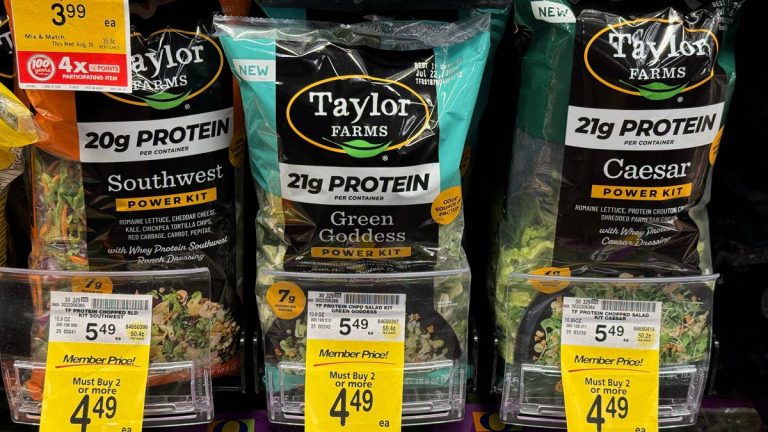
Taylor Farms said none of its branded salads or salad kits are associated with the current illnesses.
The company also said its branded salad kits do not contain iceberg lettuce.
That distinction is important because consumers have questioned online whether they should discard Taylor Farms salad kits and other packaged products unrelated to Taco Bell.
The FDA has not issued a blanket warning covering every Taylor Farms item, every packaged salad, or all iceberg lettuce sold nationwide.
Taylor Farms was also tied to McDonald’s E.coli outbreak
The Taco Bell investigation is the second major fast-food outbreak in less than two years involving produce supplied by Taylor Farms.
The Centers for Disease Control and Prevention identified Taylor Farms as the supplier of onions sent to the affected McDonald’s restaurants.
The outbreak ultimately sickened 104 people across 14 states, and 34 people were hospitalized, while one person died.
At the time, McDonald’s temporarily removed Quarter Pounders from restaurants in affected markets, then returned them without slivered onions.
The outbreak also weighed on customer traffic and contributed to weaker U.S. comparable sales at McDonald’s during the quarter.
“The E.coli outbreak from the Quarter Pounder, which led to a temporary menu removal and a decline in visits, continues to have a lingering negative impact on sales,” read the company report.
This underscores how quickly a problem involving a single ingredient can become a financial and reputational threat for a national restaurant chain.
Taco Bell may now face the same challenge, although there is no evidence yet showing that the cyclospora outbreak has reduced its sales.
The chain’s decision to remove the supplier’s lettuce nationwide could help contain the damage, especially if federal officials do not connect the product to additional restaurants or states.
What to avoid in parasitic diarrhea outbreak
The FDA advises consumers not to eat food containing shredded iceberg lettuce from Mexico served at Taco Bell restaurants in Indiana, Kentucky, Michigan, Ohio, and West Virginia.
Consumers outside those five states have not been advised to avoid Taco Bell lettuce.
Anyone who purchased affected Taco Bell food should clean and sanitize any containers or surfaces that may have come into contact with the lettuce.
People who experience frequent watery diarrhea or other symptoms after eating Taco Bell lettuce in one of the five states should contact a health care provider.
Cyclospora infections can be treated with prescription medication, but untreated illnesses may persist for weeks and can lead to dehydration.
People with weakened immune systems may face a greater risk of prolonged or serious illness.
The FDA’s investigation remains ongoing, meaning the list of affected businesses, products, and states could still expand.
Airbnb CEO Brian Chesky said his X account was hacked and that a thread promoting real-world asset (RWA) tokenization, which circulated for days as apparent thought leadership, was written by an attacker and heavily AI-generated.
The now-deleted posts argued that tokenization could make buildings, bonds and funds easier to divide, trade and settle, and referenced Robinhood’s push into tokenized assets. Posted on July 14, the thread drew more than 700,000 views and was covered across crypto media as Chesky’s own commentary before he reclaimed the account on July 17 and disowned it.
“To the person who hacked my account earlier this week: thanks for all the new crypto followers,” Chesky wrote after regaining access. “To my new crypto followers: I’m going to be a very disappointing follow.”
To the person who hacked my account earlier this week: thanks for all the new crypto followers.
To my new crypto followers: I’m going to be a very disappointing follow. https://t.co/DtO2gtgHjQ
While the Airbnb posts were fake, the market’s willingness to believe them underscores expectations that major consumer brands will eventually explore tokenization.
A Hack Without The Usual Crypto Payload
What made the compromise convincing was what it lacked. The thread named no token sale, wallet address, giveaway or investment link, the signatures that usually expose a hijacked account within seconds. Instead it read as a measured, on-trend take on a subject real executives are actively debating, which is why much of the audience, and several outlets, took it at face value.
AI-detection firm Pangram flagged the text as machine-generated, pointing to a uniform syntactic pattern built to imitate Chesky’s cadence. The episode marks a shift from smash-and-grab token scams toward slower narrative manipulation, where a hijacked account launders an idea rather than drains a wallet.
Airbnb reported the incident to X, which secured the account. How the attacker gained access, and who was responsible, remains unclear.
Investor Takeaway
Credibility itself is becoming a target, with hackers increasingly seeking to shape narratives rather than execute immediate financial scams.
Part Of A Wider Wave Of Account Takeovers
The breach lands amid a run of high-profile X hacks aimed at crypto audiences. Days earlier, hijacked SpaceX and Starlink accounts pushed a memecoin called SCATMAN, with the attacker minting and dumping the supply for about $125,000 in a textbook rug pull. In December, Binance co-founder Yi He’s WeChat account was hacked and used to promote a fraudulent token, another senior figure’s platform turned against its own audience.
The pattern holds even when the targets differ. Attackers borrow the credibility of a verified, high-follower account to reach millions instantly, whether the aim is a token dump or, in Chesky’s case, an idea. In April, X said it would start auto-locking accounts posting about crypto for the first time, a direct response to this wave of hijack-driven scams.
For a tokenization narrative still fighting for mainstream trust, an AI-written endorsement from a CEO who never wrote it is an awkward kind of publicity. As Chesky’s own disavowal shows, the cheapest thing to fake in crypto is no longer a token but conviction.