Archive

June 2026

Browsing

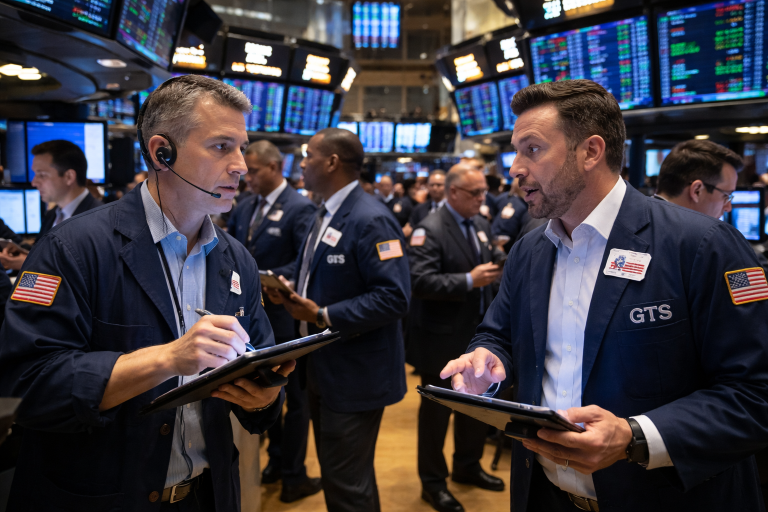
The S&P 500 Index remained under pressure last week after the Federal Reserve delivered a highly hawkish interest rate decision. It also wavered as investors reacted to the new ceasefire between the US and Iran, which drove energy prices lower. This article looks at some of the key catalysts for S&P 500 and the key ETFs like VOO and SPY.

S&P 500 Index to react to the US-Iran crisis

One of the top catalysts for the S&P 500 Index is the ongoing US-Iran crisis, which faded last week as the two sides reached an agreement to end the war for 60 days. 

This agreement has been viewed widely as a major victory for Iran as it largely gave them all they asked for. They received sanctions relief, allowing them to sell their crude oil internationally at market prices.

At the same time, the US committed to unfreezing some of its assets, giving them access to billions of dollars. Iran will also receive over $300 billion in investments from Gulf countries over time.

Most notably, Iran also received a commitment that Israel will stop its bombing campaign against Lebanon. It received all this in exchange of reopening the Strait of Hormuz, which was open before the war started. This deal led to a plunge in crude oil prices, with Brent and the West Texas Intermediate (WTI) falling below $80.

With the deal signed now, the question is whether each side will implement their part. In a statement on Friday, Iran said that its delegation would not travel to have talks with the US, citing the Lebanon issue. The country also closed the Strait of Hormuz, pushing oil prices higher. 

Micron earnings 

The S&P 500 Index has been highly sensitive to individual earnings. For example, it recently retreated sharply after the Broadcom earnings, which sent shivers in the stock market.

This week, focus will be on Micron, a company that has recently entered the $1 trillion club. It will publish its financial results on Wednesday, providing more color on its performance.

Micron’s earnings are important because of its size and the fact that it is in the hottest area in the stock market: memory. Indeed, the top gainers in the S&P 500 Index are all firms in the industry, including players like Sandisk, Western Digital, and Seagate. As such, if Micron’s earnings come short of expectations, chances are that it will have a major implication in the stock market.

The other S&P 500 companies that will publish their financial results this week are Paychex, Darden Restaurants, and FedEx.

US PCE report

The S&P 500 Index wavered last week after the hawkish Federal Reserve decision. In the aftermath, US bond yields continued rising, with the rate-sensitive two-year reaching its highest level in years. 

There will be several macro data from the US this week, with the most important one being the PCE report that comes out on Thursday. Economists expect this data to show that the PCE jumped 4.0% in May from 3.8% a month earlier. Core PCE, which excludes the volatile food and energy prices, is expected to remain at 3.3%. 

PCE is an important number because it is broader than the Consumer Price Index (CPI). It looks at the change in prices across the country, while the CPI focuses on the urban areas. Still, this data will likely not have a major impact on the stock market since it comes a week after the Fed delivered its interest rate decision.

The post Top 3 catalysts for the S&P 500 Index this week appeared first on Invezz

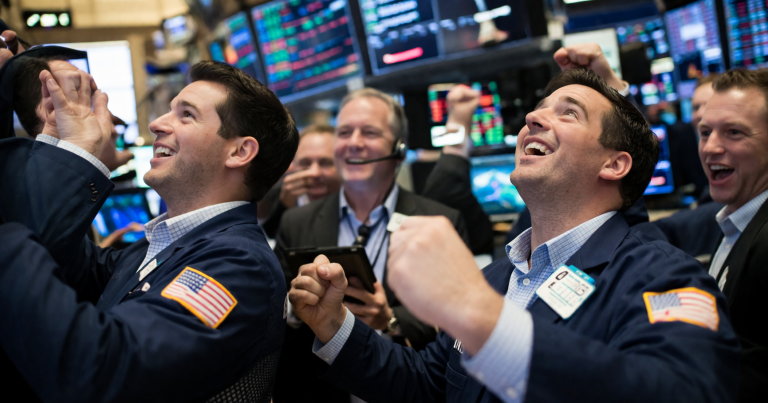
US stocks are showing surprising resilience as Wall Street increasingly abandons expectations for near-term Federal Reserve rate cuts.

Several major financial institutions have recently pushed back their forecasts for monetary easing, with some now expecting the Federal Reserve to leave rates unchanged throughout 2026.

Yet despite the more hawkish outlook, strategists remain broadly constructive on equities, particularly in the United States.

Standard Chartered, in its second-half 2026 investment outlook published on June 19, said it remains overweight global equities, with a preference for US and Asia ex-Japan stocks.

The bank forecasts the Federal Funds rate will remain in a range of 3.5% to 3.75% through the remainder of 2026, with only a single 25-basis-point cut expected in the first half of 2027.

The bank expects strong corporate earnings and continued economic resilience to support markets despite elevated borrowing costs. It forecasts the S&P 500 will reach 7,950 by mid-2027.

Standard Chartered said the US economy is performing better than many had feared, with second-quarter growth tracking around 2.2% on a seasonally adjusted annualized basis.

Full-year growth is expected to average approximately 2.1%, supported by artificial intelligence-related capital expenditure, a recovering labor market, and increased manufacturing activity.

Wall Street pushes rate-cut expectations back

The constructive outlook for equities comes even as investors adjust to a Federal Reserve that appears increasingly reluctant to ease policy.

Goldman Sachs recently pushed its forecast for the next Fed rate cuts into 2027.

The bank now expects policymakers to leave rates unchanged throughout 2026 before delivering reductions in June and December 2027.

The revision followed stronger-than-expected labor market data and reflects expectations that economic growth and inflation pressures will remain firm.

Citigroup has also delayed its expected easing timeline. The bank now forecasts rate cuts in October and December 2026, followed by another reduction in January 2027, after previously expecting cuts to begin in September.

Meanwhile, UBS Global Wealth Management has shifted its first expected rate cut into 2027, forecasting reductions in March and June next year rather than cuts beginning later this year.

The revisions come after Federal Reserve policymakers signaled a more cautious stance on inflation, prompting investors to reassess expectations that lower rates would arrive quickly.

Other assets struggle with higher rates

While equities have largely absorbed the hawkish shift, other asset classes have been less resilient.

Bitcoin was trading near $62,000 on Friday after falling from above $67,000 earlier in the week.

The cryptocurrency has struggled to regain momentum even as stocks recovered, reflecting the pressure that higher interest rates place on speculative assets.

Higher borrowing costs typically reduce the attractiveness of assets that do not generate income, particularly when yields on cash and fixed-income investments remain elevated.

Gold has also weakened. Futures recently fell 1.8% to around $4,173 an ounce after trading above $4,350 earlier in the week.

Rising real yields and a stronger dollar have weighed on demand for the precious metal, which offers no yield to investors.

The divergence has become increasingly pronounced. While stocks continue pushing toward record highs, both Bitcoin and gold have struggled to maintain gains as markets price in a longer period of restrictive monetary policy.

Earnings and AI spending drive confidence

Rather than relying on lower interest rates to justify higher valuations, investors appear increasingly focused on earnings growth and corporate spending trends.

Artificial intelligence investment remains one of the strongest drivers of capital expenditure across the US economy, supporting demand across technology, infrastructure, and manufacturing sectors.

Markets briefly wobbled following Federal Reserve Chair Kevin Warsh’s first policy meeting, which underscored policymakers’ concerns about inflation.

However, equities quickly recovered, aided by optimism surrounding an agreement between the United States and Iran that could help stabilize energy markets through the reopening of the Strait of Hormuz.

For now, Wall Street’s message appears increasingly clear: rate cuts may be further away than previously expected, but many strategists believe strong earnings growth, economic resilience, and continued AI investment can keep supporting equities even in a higher-rate environment.

The post Why a hawkish Fed isn't scaring Wall Street appeared first on Invezz

Cathie Wood’s ARK Invest increased its exposure to Tesla and Snowflake on Thursday while continuing to trim its position in Roku, according to the firm’s latest daily trading disclosures.

The moves underscore ARK’s continued focus on artificial intelligence, cloud software, and long-term technology themes even as market volatility persists around some of its biggest holdings.

ARK’s purchases came as TSLA shares remained under pressure following the market debut of Elon Musk’s SpaceX and as Snowflake continued to attract investor interest as a beneficiary of growing demand for data and artificial intelligence applications.

ARK rebuilds Tesla position after SpaceX-related selling

ARK’s exchange-traded funds purchased 54,815 Tesla shares valued at approximately $21.9 million.

The purchases were spread across the ARK Innovation ETF and the ARK Next Generation Internet ETF.

Tesla remains the largest holding in the ARK Innovation ETF, representing 9.7% of the fund’s assets, and the second-largest position in the ARK Next Generation Internet ETF, accounting for 8.6% of the portfolio.

The latest purchases mark a reversal from last week, when ARK sold portions of its Tesla holdings as SpaceX went public.

By June 12, ARK held approximately 3.29 million SpaceX shares across several exchange-traded funds.

It remains unclear whether those shares were acquired through an initial public offering allocation or purchased in the open market after trading began.

Wood has long viewed both Tesla and SpaceX as investments tied to transformative technologies rather than traditional business models.

ARK’s research has argued that Tesla’s future opportunities extend beyond electric vehicles into areas including robotaxis, robotics, and energy storage. The investment firm expects Tesla shares to reach $2,600 by 2029.

ARK has also highlighted SpaceX’s potential role in artificial intelligence infrastructure.

“SpaceXAI will be able to monetize its infrastructure as it pushes toward AI’s competitive frontier. Ultimately, the compute capacity from orbital AI servers, and their lower costs, should differentiate SpaceXAI from its earth-centric competitors,” wrote ARK Chief Futurist Brett Winton in the firm’s Innovation Newsletter earlier this week.

Snowflake and healthcare buys offset Roku reduction

Beyond Tesla, ARK purchased approximately 149,700 shares of Snowflake valued at roughly $34.8 million.

The fund also acquired additional shares of the pharmaceutical company Eli Lilly.

At the same time, ARK sharply reduced its Roku position.

The firm’s funds sold a combined 721,279 Roku shares worth approximately $99.6 million on Thursday, following earlier sales totaling more than $93 million this week and an additional disposal of 239,267 shares on Wednesday.

ARK also sold positions in Strata Critical Medical and Twist Bioscience.

The portfolio rotation suggests increasing conviction in artificial intelligence, cloud computing, and Tesla-related growth opportunities while reducing exposure to streaming and media-related businesses.

Musk transactions and SpaceX volatility remain in focus

Tesla’s latest gains also coincided with news that Musk exercised stock options tied to approximately 303.96 million shares at a strike price of $23.34 and surrendered 17.53 million shares to cover a tax bill of approximately $7.09 billion.

Meanwhile, SpaceX has given up some of its initial post-IPO gains after rising as much as 67% above its $135 offering price.

Despite the recent pullback, ARK’s latest moves suggest Wood remains committed to Musk’s long-term vision and continues positioning her funds around technologies she believes will shape the future economy.

The post Cathie Wood buys more Tesla, cuts Roku as ARK doubles down on AI appeared first on Invezz

US stocks opened higher on Thursday as investors looked to recover from the previous session’s selloff, with optimism surrounding a temporary US-Iran peace agreement helping offset concerns about a more hawkish Federal Reserve under new Chair Kevin Warsh.

The Dow Jones Industrial Average rose about 349 points, or 0.68%, while the S&P 500 gained 1.03%. Nasdaq Composite climbed 1.18%, led by strength in semiconductor stocks.

The rebound followed Wednesday’s sharp market decline after Federal Reserve officials left interest rates unchanged but indicated that additional rate hikes may still be necessary to contain inflation.

Investors weigh Fed outlook and policy uncertainty

Financial markets reassessed the path of monetary policy after the Federal Reserve’s first meeting under Warsh’s leadership.

The central bank held its benchmark interest rate steady, but policymakers’ projections suggested a more hawkish stance than investors had anticipated.

Nine of 18 officials now expect interest rates to increase in 2026, while Warsh declined to submit his own rate forecast.

Market expectations for further tightening increased sharply.

According to CME Group’s FedWatch tool, investors are now pricing in a 50% probability of a quarter-point rate increase in September, up from 27% on Wednesday.

Analysts said the combination of leadership changes and diverging views among policymakers may keep the Federal Reserve on hold for an extended period.

Middle East optimism and lower oil prices support sentiment

Despite concerns about monetary policy, investor sentiment improved as oil prices fell to their lowest levels in more than three months, raising hopes that inflation pressures could ease without requiring further rate increases.

The United States and Iran also released the text of an interim agreement signed by both presidents.

The agreement extends the ceasefire reached in April by another 60 days, providing additional time for negotiations toward a final peace deal.

Markets have largely recovered from the weakness seen earlier in June, supported by a resilient US economy, a broadening rally beyond technology stocks, and optimism surrounding diplomatic progress in the Middle East.

Recent economic data also reinforced confidence in the economy.

Data released on Wednesday showed that US retail sales increased more than expected in May, with consumers purchasing more automobiles and other goods despite higher gasoline prices.

Semiconductor stocks lead gains

Technology and semiconductor shares led Thursday’s advance.

Intel shares rose more than10% in trading after President Donald Trump said Apple had agreed to work with the company on designing and manufacturing chips in the United States.

Other chipmakers also moved higher. Nvidia gained more than 1.2%, while Micron Technology and Marvell Technology advanced more than 5%.

The iShares Semiconductor ETF rose more than 4.6%.

Elsewhere, shares of Rumble jumped 13% after the company rebranded as RUM Group and completed its acquisition of German AI cloud company Northern Data.

Smith & Wesson gained more than 23% after reporting higher fourth-quarter sales.

Accenture moved sharply lower, falling more than 15% after trimming the upper end of its annual revenue forecast and announcing plans to acquire a majority stake in Dragos and fully acquire runZero and NetRise in a combined deal valued at $4.18 billion.

Investors were also preparing for the quarterly expiration of stock options, index options, and futures contracts, commonly known as “triple witching,” an event that can increase trading volumes and market volatility.

The post Dow opens 349 points higher as chip stocks rally on Iran deal optimism appeared first on Invezz

  • In the short term, $68K remains the critical level to monitor.
  • Bitcoin (BTC) is currently trading around $65K.

Bitcoin’s recent price action has shifted the liquidity landscape. During the decline below $60K, a significant amount of downside liquidity was absorbed as stop-loss orders and leveraged positions were cleared from the market. With the February low now swept, much of the immediate selling pressure beneath current prices has been addressed.

As a result, liquidity is increasingly concentrated at higher levels, making $68K the most crucial area to watch in the near term. On the downside, the $60K area still represents a notable support area. Traders are keeping an eye on the $74K and $78K levels in the future. If Bitcoin is able to regain higher ground and positive momentum keeps growing, these regions might become important targets.

As per CMC data, Bitcoin, the dominant asset, trades at around $65,312. Besides, the daily trading volume has dropped by over 23.56%, likely reaching the $24.12 billion mark. Volatile market moves forced $58.21 million in total Bitcoin liquidations over the past 24 hours.

If Bitcoin bears get nurtured well, the price might fall to a crucial support range at around $65,202. With more pressure on the downside, the death cross emerges and takes the price even lower, below $65,112. Upon a bullish turn takes place, the BTC price would rise to a resistance level at $65,481. Assuming the upside pressure is gaining more traction, the price might climb toward $65,591, along with the golden cross.

Bitcoin’s Market Momentum: Should Traders Expect Further Declines?

The signal line is below the Moving Average Convergence Divergence (MACD) line, but both lines are above the zero line. It implies that the momentum is waning, yet the upswing is going strong. The BTC market may enter a consolidation zone, nevertheless, as the buying pressure has lessened.

(Source: TradingView)

Bitcoin’s Chaikin Money Flow (CMF) indicator reading of 0.15 indicates solid buying pressure and a steady capital inflow. The buyers are accumulating the asset, and it reflects consistent demand. It supports a bullish outlook and is likely to help sustain the current price trend.

In addition, the daily Relative Strength Index (RSI) found at 47.07 points out to neutral to slightly bearish momentum. As it sits below the 50 mark, there is no strong downside pressure. BTC is neither overbought nor oversold, with a balanced market with weak directional momentum. 

(Source: TradingView)

BTC’s Bull Bear Power (BBP) value at -908.04 shows extremely strong bearish pressure. Sellers are dominating the market with significant force. Furthermore, the market is under heavy pressure, and any recovery attempt would require a substantial shift in buying interest to change the trend.

Crypto Market Highlights

With a $5.5B Futures Debut, Kalshi Sets Its Sights on a Bigger Financial Market

Shares of BMW fell 7% on Tuesday after the German luxury carmaker issued a sweeping profit warning, citing worsening market conditions in China and the impact of geopolitical tensions in the Middle East.

The decline pushed BMW shares to their lowest level since November 2020 and dragged other European automakers lower, with Volkswagen and Mercedes-Benz also coming under pressure as investors reassessed the outlook for the sector.

The warning comes just weeks after Milan Nedeljkovic succeeded Oliver Zipse as chief executive, adding to scrutiny over the company’s strategy at a time when European automakers are grappling with structural changes in their largest overseas market.

China’s weakness hits earnings outlook

In a statement released after market close on Tuesday, BMW said conditions in China deteriorated further during the second quarter, leading to more intense competition that has spilled over into the wider Asia-Pacific region.

The company said weaker sales in the region have outweighed stronger performance in Europe and the United States.

BMW also pointed to the economic fallout from the conflict in the Middle East, saying elevated energy prices have increased costs while geopolitical uncertainty has weakened consumer sentiment across global markets.

As a result, the company cut guidance across several key financial metrics.

BMW lowered its automotive earnings-before-interest-and-tax margin forecast to 1%-3%, down from a previous range of 4%-6%.

The return on capital employed in its automotive division was reduced to 1%-5% from 6%-10%, while group profit before tax is now expected to decline significantly, compared with an earlier forecast for a moderate decrease.

Analysts say cut exceeds expectations

The magnitude of the guidance reduction surprised analysts who had already anticipated some deterioration in earnings due to persistent weakness in China.

Deutsche Bank analyst Tim Rokossa said BMW was expected to revise its outlook, but the scale of the downgrade was larger than anticipated.

Rokossa noted that BMW shares had already been underperforming and highlighted the company’s recent decision to cancel a long-planned CEO-investor meeting.

He said the updated outlook reflected softer conditions in China and across Asia-Pacific, as well as second-order effects from the Middle East conflict.

“There are now more questions than answers,” Rokossa wrote, adding that investor events scheduled later this year may provide only limited clarity.

Deutsche Bank lowered its price target on BMW shares to 90 euros from 100 euros while maintaining a buy rating.

Questions over business model

Alongside the weaker outlook, BMW said it would intensify cost-cutting efforts and warned of a negative one-off impact during the second half of 2026.

That announcement has fuelled speculation that management may be preparing broader structural changes.

Jefferies analysts said investors had largely expected a profit warning but not a margin reset of this scale.

The brokerage suggested the comments indicate management may be preparing significant changes to BMW’s manufacturing footprint.

“It seems to us that BMW could be rethinking a global assembly business model,” Jefferies wrote.

The bank expects BMW to increase sourcing and production integration in North America and China, reducing reliance on exporting internal-combustion-engine components from Germany.

Jefferies also said future discussions could focus on capital allocation, non-automotive investments and the possibility of using China as a larger export base because of its cost advantages.

The brokerage cut its price target to 70 euros from 92 euros while maintaining a hold rating.

Industry faces broader shift

BMW’s challenges mirror wider changes confronting the European auto industry.

Volkswagen Chief Executive Oliver Blume has previously warned that the export-led model that underpinned Germany’s automotive success for decades is becoming less viable.

For years, European manufacturers relied on strong profits from China, the world’s largest car market.

However, domestic Chinese brands have steadily gained market share, while an extended slowdown in vehicle demand has intensified competition.

China’s auto market recorded its eighth consecutive month of declining sales in May, increasing pressure on foreign manufacturers already struggling to maintain pricing power.

For investors, BMW’s warning has become the latest indication that Europe’s carmakers may need to accelerate strategic changes as they adapt to a rapidly evolving global automotive landscape.

The post BMW shares tumble 7% as China weakness forces sharp forecast cut appeared first on Invezz

  • Bitcoin price is trading at the $66K mark.
  • If momentum holds, this region is BTC’s next major resistance target.

Bitcoin has finally reclaimed and broken above the key $64,360 resistance level, a zone that had capped price advances over the past several sessions. The chart shows multiple failed attempts to push through this level, making the latest breakout significant from a technical standpoint.

The sequence of higher lows that developed along the rising trendline is noteworthy because it shows that buyers were gradually entering the market at increasing prices. The short-term acquisition of control by buyers is confirmed by the breakout above resistance.

The next significant level to keep an eye on is about $67,630. If the current momentum holds, this region might become Bitcoin’s immediate target as it is the next major resistance. The bullish structure would be strengthened by a persistent advance above $64,360.

The power of the move would be strengthened if $64,360 moved from resistance to support. The path of least resistance seems to be upward as long as the price stays above this level, with $67,630 looming as the next important upside target.

Additionally, following a surge of more than 2.60%, the price of Bitcoin is currently $66,153. The asset’s price began the day at a low of $63,634 and reached a high of $66,297. At $28.92 billion, the trade volume has increased by more than 72%. Meanwhile, the BTC Fear and Greed Index value is settled at 20, which indicates extreme fear. 

What’s Next for Bitcoin’s Price Trend?

According to the price chart, the price may challenge the $65,792 support if the BTC bears get stronger. A more intensified downside may initiate the death cross to emerge and drive the price even lower. On the upside, assuming the Bitcoin bulls gain momentum, the price could climb to the resistance at $66,421. The golden cross might form with the potential bullish correction.

The MACD line is above the signal line, and both are above the zero line, signalling strong bullish momentum. Both short and long-term momentum are aligned to the upside. Moreover, BTC’s CMF value at 0.27 indicates strong buying pressure and healthy capital inflows. Buyers are actively accumulating the asset and supporting the current uptrend.

(Source: TradingView)

Bitcoin’s BBP reading of 2,397 reflects strong bullish pressure. The buyers are dominating the market, pushing the price far above its average. The trend is still firmly under the bulls’ grip. Additionally, the daily RSI has entered the overbought zone at 70.71. Traders keep an eye out for consolidation or a brief decline at these levels, even though the rally may continue.

Crypto Market Highlights

$4.93M in Profit and a 90% Win Rate: Ethereum Whale Makes Big Moves as ETH Holds $1.7K

Uniswap (UNI) token has returned to the spotlight after Standard Chartered initiated coverage of the decentralised exchange token with a long-term price target of $100 by 2030.

The bank’s forecast immediately grabbed the market’s attention, helping UNI surge 13.8% in 24 hours to $2.99 and outperform the broader cryptocurrency market.

The move was accompanied by a sharp increase in trading activity, with the daily trading volume climbing to more than $404 million, while UNI briefly touched $3.01 before pulling back slightly.

Why Standard Chartered sees major upside for UNI token

The Standard Chartered forecast was issued by Geoffrey Kendrick, Head of Digital Assets Research at the bank.

His thesis centers on the rapid expansion of tokenised real-world assets (RWAs) and the growing role of decentralised finance in global capital markets.

According to the bank’s estimates, tokenised assets could grow from approximately $340 billion today to around $4 trillion by 2028.

That figure includes stablecoins as well as tokenised versions of traditional financial products such as government bonds, money market funds, equities, and real estate.

The bank also expects the share of those assets actively used within decentralised finance applications to rise significantly.

Current estimates place DeFi participation at roughly 3.5% of tokenised assets, but Standard Chartered projects that figure could reach 30% by 2030.

If that scenario plays out, assets actively deployed across DeFi platforms could approach $2.7 trillion by the end of the decade.

That would represent a 37-fold increase from current levels.

For Uniswap, the implication is straightforward. As one of the largest decentralized exchanges in the market, the protocol could become a key venue where tokenized assets are traded, creating higher liquidity, larger trading volumes, and stronger protocol revenues.

The bank’s forecast outlines a gradual appreciation rather than an immediate jump.

Its projected path places UNI at $6.50 in 2026, $20 in 2027, $40 in 2028, $65 in 2029, and eventually $100 by 2030.

The caveat that investors should not ignore

The biggest challenge for the $100 forecast is that it depends heavily on future adoption rather than current fundamentals.

Standard Chartered’s thesis is built around the assumption that traditional finance will increasingly migrate on-chain over the next several years.

While tokenisation has gained momentum, there is no guarantee that institutions will adopt decentralised finance at the pace the bank expects.

Another factor is liquidity fragmentation. Tokenised assets can be issued across multiple blockchains and use different standards, which may spread trading activity across various platforms instead of concentrating it on a single protocol.

There is also a significant difference between tokenising assets and creating active markets for those assets.

A bond or equity can exist on a blockchain without generating meaningful trading volume.

For Uniswap to benefit fully from the projected growth in tokenisation, those assets must also attract sustained trading activity.

This is the key caveat in the bullish narrative.

The forecast assumes not only that tokenised assets will grow into a multi-trillion-dollar market, but also that a meaningful share of that activity will flow through decentralised exchanges such as Uniswap.

Uniswap price analysis

As the Uniswap price rose, it broke above its 7-day simple moving average (SMA) of $2.626 and its 30-day SMA of $2.945.

These technical breakouts helped reinforce the bullish momentum generated by the Standard Chartered report.

Simple Moving Average on the Uniswap price chart

However, momentum indicators suggest that the market may be getting ahead of itself in the short term.

UNI’s RSI 14 has climbed above 78, pushing the token into overbought territory.

RSI on the Uniswap price chart

Historically, RSI readings above 70 often signal strong buying pressure, but they can also indicate that a period of consolidation or profit-taking is becoming more likely.

In the near term, traders should focus on the immediate pivot level near $2.97.

Holding above $2.97 could allow the token to challenge resistance around $3.10, where a major descending trendline currently intersects with price action.

Further, a successful break above $3.10 would strengthen the case for a broader trend reversal after months of weakness.

On the other hand, failure to hold current levels could open the door for a retracement toward the $2.75 support zone.

The post Uniswap price forecast: Standard Chartered sets $100 target, but there is a caveat appeared first on Invezz

Advanced Micro Devices (AMD) stock price has soared this year, making it one of the top gainers on Wall Street.

It jumped by 133% this year, bringing its market capitalization to over $834 billion.

This article explores why it may be the next big name to hit a $1 trillion market cap.

AMD stock surge puts the $1 trillion valuation milestone within reach

The ongoing artificial intelligence boom has pushed several companies to the exclusive $1 trillion club.

Some of the most notable of them are SK Hynix, Samsung, Broadcom, and Micron.

AMD, which is run by Jensen Huang’s cousin, could be the next big entrant to this club.

With its valuation at $834 billion, the company needs to jump to at least $613 to get to that milestone.

The stock peaked at $546 earlier this month.

There are signs that the stock will jump to that milestone.

One of the most notable ones is its technicals, which indicate that the stock has the momentum to achieve that.

The daily chart shows that the AMD stock price made a strong bullish breakout in April this year.

Before that, it had remained inside a narrow range of between $194 and $265 for months.

That is a sign that it has now moved to the markup phase of the Wyckoff Theory, which is characterized by more demand.

AMD stock has remained above the 50-day and 100-day Exponential Moving Averages (EMA), which have provided it with substantial support over time.

It has also crossed the important ultimate resistance level of the Murrey Math Lines tool.

That is a sign that it is not yet in the overbought zone.

Therefore, more gains towards the key point of $613 will be confirmed if it jumps above the key resistance level of $546, its highest point this year.

A move above that level will invalidate the forming double-top point and signal more gains ahead. 

AMD stock chart | Source: TradingView

READ MORE: Nvidia, AMD, Arm stocks rally as BofA sees $170B agentic AI opportunity

AMD’s business is growing despite risks

Fundamentally, AMD’s business is doing well, with demand for its products continuing to grow.

The most recent results show that its revenue growth continued, reaching $10.3 billion, up by 38% from the same period last year. 

This growth was mostly driven by its data center business, which made over $5.7 billion in revenue.

The client & gaming business made $3.6 billion, while its embedded segment rose by just 6%.

Wall Street analysts are optimistic that AMD’s revenue and margin growth will accelerate in the coming years. The average estimate is that its revenue will jump by 42% to $50 billion, followed by $76 billion next year.

Still, the company faces some major headwinds. The biggest one is that Nvidia is encroaching on its CPU territory. It recently launched Windows chips that it hopes will gain market share in the future. 

Nvidia’s entry means that there are now three major players in the CPU industry: AMD, Nvidia, and Intel.

There is a possibility that Nvidia will take some share of its business soon.

The other risk is its valuation, which is quite rich compared to its peers.

It has a forward price-to-earnings ratio of 94, much higher than the sector median of 32. Its multiple is also higher than Nvidia’s 22.

This likely explains why analysts from companies like Citigroup, Barclays, Wolfe Research, and Zacks downgraded their outlooks.

The post AMD stock surge brings $1 trillion status within reach, but key risks remain appeared first on Invezz

The S&P 500 Index and its top ETFs, like State Street’s SPY, Vanguard’s VOO, and BlackRock’s IVV jumped for two consecutive days. It jumped to $7,430, up modestly from this month’s low of $7,240. This article looks at some of the top news to watch this week.

US and Iran deal to end the war

The first main catalyst for the S&P 500 Index and other ETFs is the US-Iran deal to end the war. President Donald Trump confirmed that the US will sign a deal today. Iran, on the other hand, insisted that the deal may be signed at a later date and that it will do so electronically.

Still, there is a risk that a deal will flop as it has done in the past. For example, there is a likelihood that Israel and its lobby in the United States will work to undermine the deal. For example, Israel has committed to continuing fighting in Lebanon, where it has killed thousands of people.

A deal between the US and Iran will be bullish for the stock market. For one, it will lead to lower crude oil prices, which will lower inflation in the country. Data released last week showed that the headline Consumer and Producer price index jumped to 4.2% and 6.4% in May, respectively. 

Such a move will also lead to lower bond yields. Indeed, the ten-year yield dropped to 4.8%, while the five-year fell to 4.21%. That is a sign that investors believe that the Federal Reserve will be dovish.

Federal Reserve interest rate decision

The S&P 500, IVV, SPY, and VOO ETFs will also react to the upcoming Federal Reserve interest rate decision. This will be a crucial decision because it will be the first one by Kevin Warsh, whom Trump nominated to replace Jerome Powell.

Economists are unanimous in that the Fed will decide to leave interest rates unchanged between 3.50% and 3.75%. As such, the headline rate decision will have a minimal impact on the stock market. Instead, traders will react to Warsh’s statement, which will provide more information on what to expect.

A hawkish tone will raise Fed independence concerns as it may start a feud between Warsh and Trump.

In addition to the Fed, the Bank of England (BoE), Bank of Japan (BoJ), Brazilian, Swiss, Norges, and Russian central banks will also deliver their interest rate decisions this week.

There will also be some major macro news from the United States, including US retail sales, initial jobless claims, export and import prices, and industrial production.

SpaceX post-IPO performance

The S&P 500 Index will also react to the performance of SpaceX, which went public on Friday. SpaceX’s stock jumped by 19%, with its market capitalization crossing the $2 trillion mark. This IPO made Elon Musk the world’s first trillionaire.

Still, while the SpaceX IPO was a success, the hard part will start this week. Historically, newly listed companies often retreat after a few days. As such, if this happens, there is a likelihood that the stock market will also retreat as investors start booking profits.

The post S&P 500, SPY, VOO, IVV outlook: top news to watch this week appeared first on Invezz