

Archive

June 3, 2026

Browsing

France has maintained its position as Europe’s leading destination for foreign direct investment projects, according to the latest EY Europe Attractiveness Survey. 

The country attracted 852 new investment projects in 2025, far ahead of its closest rivals, even as the overall number of projects across Europe fell to the lowest level in 11 years, the survey said.

Foreign investment is widely regarded as a vital driver of economic growth, innovation, and job creation. 

Governments across the continent are competing aggressively with incentives, tax breaks, and high-profile summits to lure international companies.

France strengthens lead with Choose France initiative

President Emmanuel Macron’s “Choose France” campaign, launched in 2018, continues to deliver results. At this year’s summit, Macron announced that foreign companies had pledged investments worth a record €93 billion.

Despite a 17% drop in new projects to 852 in 2025, France comfortably retained the top spot. The country has successfully positioned itself as a stable and attractive hub for international investors.

Source: Euronews

UK and Germany follow as investment slows across Europe

The United Kingdom ranked second with 730 projects in 2025, down 14% from the previous year. Germany placed third with 548 projects, a 10% decline and its lowest level since 2009.

The long-term trend for Germany is particularly concerning. Compared to 2019, the number of foreign investment projects has plunged 44%, a steeper fall than in France (-28%) or the UK (-34%).

Europe as a whole recorded 5,026 new investment projects in 2025, down 7% from 2024.

This marked the lowest annual total in 11 years, reflecting broader economic uncertainties, geopolitical tensions, and slower global growth.

Why France continues to win

Analysts attribute France’s resilience to proactive government policies, improved business environment reforms, and its central position in the European Union.

The “Choose France” initiative has helped the country stand out by offering tailored incentives and high-level engagement with investors.

In contrast, Germany continues to face challenges, including high energy costs, regulatory complexity, and weaker domestic demand, which appear to be deterring some foreign investors.

The UK has benefited from post-Brexit flexibility in certain sectors but continues to face headwinds from labour shortages and trade frictions.

Broader implications for European competitiveness

The EY survey tracks actual announced investment projects rather than capital flows, providing a clearer picture of real economic activity on the ground. 

These projects typically involve new factories, research centres, and expansions that create direct jobs and strengthen supply chains.

The overall decline in projects across Europe signals growing challenges in attracting foreign capital at a time when many economies are seeking to boost growth and innovation.

Competition from the United States, Asia, and emerging markets remains intense.

Outlook for 2026

With global economic conditions still uncertain, European nations are expected to intensify their efforts to attract foreign investment. 

France appears well-positioned to defend its lead, while the UK and Germany will need to address structural issues to regain momentum.

As governments prepare new incentives and policy measures, the battle for foreign investment projects is likely to heat up further in 2026. 

Success in this area could prove decisive for Europe’s economic recovery and long-term competitiveness. 

The post France beats UK and Germany to remain Europe’s top FDI destination appeared first on Invezz
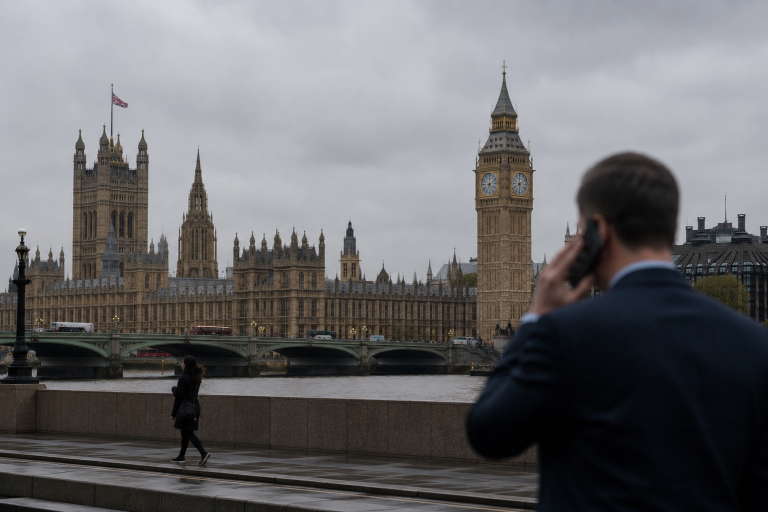

British services firms recorded a modest decline in activity in May as rising costs linked to the Iran war and weakening demand weighed on business conditions, according to a survey released on Wednesday.

The S&P Global Purchasing Managers’ Index (PMI) for Britain’s services sector fell to 49.3 in May from 52.7 in April.

The reading marked the first contraction in output since April 2025.

However, it came in above the preliminary flash estimate of 47.9.

A PMI reading below 50 indicates contraction, while a reading above 50 signals growth.

The decline in services activity came on the same day that the OECD slightly raised its growth forecast for Britain in 2025.

The organisation increased its projection to 0.9% from the 0.7% forecast issued shortly after the outbreak of the Middle East conflict.

Despite the deterioration in services activity, the downturn indicated by the PMI survey was less severe than that seen in the euro zone.

Survey respondents reported weaker demand from both domestic and overseas customers during May, contributing to the slowdown in business activity.

The composite PMI, which combines services and manufacturing data, was revised higher to 49.7 from a preliminary estimate of 48.5.

However, the reading remained below April’s level of 52.6, signalling an overall decline in private-sector activity.

Inflation pressures remain elevated

While activity weakened, inflationary pressures remained strong across the services sector.

The PMI measure of input cost inflation eased slightly in May but remained at its second-highest level since December 2022, a period that followed Russia’s full-scale invasion of Ukraine.

Businesses reported that higher energy, fuel, and transport costs, along with rising salaries, contributed to the increase in operating expenses.

Companies responded by passing these costs on to customers.

The survey showed firms raised prices at the second-fastest pace in three years, only marginally below the increase recorded in April.

Tim Moore, economics director at S&P Global Market Intelligence, said ongoing concerns about inflation and geopolitical risks continued to affect sentiment.

“Worries about a prolonged spike in inflationary pressures, combined with elevated geopolitical tensions and subdued demand, continued to weigh on business activity expectations in May,” Moore said.

Bank of England faces policy dilemma

Despite the inflation concerns highlighted by the survey, the Bank of England is widely expected to leave interest rates unchanged at its upcoming policy meeting.

Markets on Tuesday priced in a 90% probability that the central bank would keep borrowing costs at 3.75% when it announces its decision on June 18.

Governor Andrew Bailey has taken the view that policymakers have time to assess the economic impact of recent developments before making further decisions on interest rates.

However, Bank of England policymaker Megan Greene suggested that inflation pressures may be extending beyond energy-related sectors.

Speaking at the University of Derby on Tuesday, Greene said services firms are not heavily exposed to energy costs were still increasing prices significantly.

Confidence falls, and hiring continues to decline

Business sentiment regarding the year ahead weakened further in May.

According to S&P Global, confidence fell to its lowest level since April last year, when sentiment dropped sharply following the announcement of a broad range of trade tariffs by US President Donald Trump.

Employment conditions also remained under pressure.

Hiring declined for the 20th consecutive month, marking the longest uninterrupted period of job losses since early 2010.

Matt Swannell, chief economic adviser to forecasters ITEM Club, said policymakers were facing increasingly difficult choices.

The survey highlights the challenge facing Britain’s economy, where slowing activity, persistent inflation pressures, and weakening confidence are occurring simultaneously, creating a difficult environment for both businesses and policymakers.

The post UK service firms face first output decline since april 2025, PMI shows appeared first on Invezz

The Organisation for Economic Co-operation and Development (OECD) delivered a cautious global economic outlook on Wednesday, downgrading growth forecasts while raising inflation projections as the ongoing Middle East conflict continues to disrupt energy supplies and unsettle markets.

In its latest Economic Outlook, the Paris-based institution highlighted how geopolitical tensions, particularly around the Strait of Hormuz, are creating fresh headwinds for the world economy. 

The energy price volatility has complicated the path to a soft landing for major economies already grappling with post-pandemic challenges

Oil market volatility intensifies

Oil prices have swung sharply in recent sessions. They rose significantly on Monday after Iran announced the suspension of indirect talks with the US, against the backdrop of Israel’s offensive against Hezbollah in Lebanon. 

On Wednesday, crude oil extended gains from the previous two sessions to climb over 2% as hostilities between the US and Iran in the Middle East continued.

Iran launched ballistic missiles towards regional neighbours Kuwait and Bahrain, injuring ​dozens according to Kuwaiti authorities, and US forces conducted strikes on Iran’s Qeshm Island.

Iranian news agency Tasnim also reported that Iran and its regional allies were considering a full blockade of the Strait of Hormuz and the Bab el-Mandeb Strait.

Brent crude spiked to nearly $99 per barrel before pulling back. This morning, prices were trading around $98. 

Carsten Fritsch, commodity analyst at Commerzbank AG, noted the dramatic swings in a recent report. 

Hopes of a resumption of oil supplies from the Gulf region had caused oil prices to fall by almost 20% in May, marking the sharpest monthly decline since the start of the coronavirus pandemic in March 2020.

Carsten Fritsch
Commodity analyst at Commerzbank AG

This volatility underscores the fragile nature of the current energy market and its direct impact on global economic stability.

Growth forecasts trimmed

The OECD has revised down its global GDP growth projections for 2026, citing the energy supply shock from restricted shipping through the Persian Gulf. 

Advanced economies, particularly in Europe, face compounded challenges as higher energy costs weigh on consumption and industrial activity.

The United States, the Euro area, and the United Kingdom have all seen downward revisions.

OECD downgrades global growth forecast amid Middle East energy shock. Source: OECD

Emerging markets are also feeling the pinch through higher import bills and weaker global demand. 

The report marks a shift from earlier optimism, as the Middle East conflict disrupts what had been a gradual recovery.

Inflation pressures resurface

Higher energy costs are feeding directly into broader price levels, forcing the OECD to raise its inflation forecasts. 

After significant progress in taming inflation over the past two years, central banks now risk facing renewed pressure.

This creates a policy dilemma: aggressive rate hikes could stifle growth, while hesitation might allow inflation to become more persistent. 

G20 inflation projections have been revised higher, with second-round effects on wages and services adding to the concern.

Regional divergences and vulnerabilities

Europe remains particularly exposed due to its reliance on imported energy.

Germany and other industrial powerhouses are feeling the strain, while France continues to attract foreign investment but cannot fully escape the broader energy-driven slowdown.

In the US, resilient consumer spending is being tested by rising fuel costs.

Meanwhile, commodity exporters may see some short-term benefits, but a broader slowdown in global trade poses risks.

Fritsch’s analysis highlighted how quickly sentiment can shift. Despite Monday’s spike toward $98, prices had retreated on renewed diplomatic hopes in the next session, illustrating the market’s sensitivity to every headline from the region.

Prices were back around that level again on Wednesday. 

Policy challenges ahead

The OECD urges policymakers to balance inflation control with growth support.

Targeted fiscal measures to protect vulnerable households are recommended, alongside accelerated efforts toward energy diversification and resilience.

Downside risks remain significant. A prolonged closure of the Strait of Hormuz could trigger deeper economic pain, potentially pushing several economies into recession. 

On the upside, a swift diplomatic resolution and reopening of key shipping routes could allow for a stronger rebound in 2027.

Technological advancements in AI and green energy continue to provide structural tailwinds, but near-term challenges dominate the narrative.

The post OECD sees slower growth ahead as Hormuz shock hits global economy appeared first on Invezz

US private-sector hiring strengthened in May, offering fresh evidence that the labor market remains resilient despite rising inflation and uncertainty stemming from geopolitical tensions in the Middle East.

According to data released Wednesday by payroll processor ADP, private employers added 122,000 jobs last month, exceeding economists’ expectations of 110,000 and marking the strongest pace of hiring since January 2025.

The figure also improved from April’s revised gain of 105,000 jobs.

The latest report suggests that businesses continue to add workers at a healthy pace even as higher energy costs linked to the conflict involving Iran weigh on the broader economic outlook.

Hiring broadens across sectors

Unlike previous months, when job growth was concentrated in a handful of industries, May’s gains were spread more widely across the economy.

Eight of the 10 sectors tracked by ADP recorded job growth, with education and health services leading the way by adding 57,000 positions. Trade, transportation and utilities followed with 36,000 new jobs, while construction added 8,000 and financial activities contributed another 7,000 positions.

“Hiring was more broad-based in May than we’ve seen in the last few years,” ADP Chief Economist Nela Richardson said. “The labor market continues to show sustained momentum going into the summer hiring season.”

The broader distribution of hiring gains may reassure policymakers and investors who have been looking for signs that labor demand is not dependent on a small number of sectors.

Small businesses lead hiring

Job creation was also spread across businesses of different sizes, though smaller firms accounted for the largest share of new positions.

Companies employing fewer than 50 workers added 67,000 jobs during the month, while large businesses with 500 or more employees created 40,000 positions.

Medium-sized firms contributed 17,000 jobs.

Among the smallest employers, firms with between one and 19 workers added 49,000 jobs.

The strong showing is notable because smaller businesses tend to be more vulnerable to elevated borrowing costs and economic uncertainty.

Their continued willingness to hire suggests that labor demand remains firm despite concerns about inflation and the impact of higher energy prices.

Wage growth remains steady

The report also showed little change in wage trends.

Workers who remained in their jobs saw annual pay growth of 4.4%, unchanged from April.

Meanwhile, employees who switched jobs received pay increases of 6.5%, slightly lower than the previous month.

While wage growth has moderated from the peaks seen during the post-pandemic labour shortage, it remains elevated enough to support consumer spending.

Focus shifts to official jobs report

The ADP figures arrive ahead of Friday’s closely watched employment report from the Labor Department.

Economists currently expect the government data to show that the US economy added around 80,000 jobs in May, while the unemployment rate remained steady at 4.3%.

The labor market has recovered from a softer patch last year, when hiring slowed amid uncertainty linked to tariffs and broader economic concerns.

More recently, rising commodity prices following tensions in the Middle East have reignited inflation worries, though layoffs have remained historically low.

Financial markets continue to expect the Federal Reserve to keep interest rates unchanged for the foreseeable future as policymakers assess whether inflation pressures linked to higher energy prices prove temporary or more persistent.

The post US private employers add 122,000 jobs in May, beating estimates, ADP says appeared first on Invezz

British new car registrations increased by about 6% in May compared with the same month a year earlier, supported by robust demand for plug-in vehicles, according to data released by New Automotive on Wednesday.

Battery electric vehicles (BEVs) continued to gain market share, accounting for 27% of all new vehicle registrations during the month.

The figures highlight the growing adoption of electric vehicles in the UK as consumers increasingly shift away from traditional petrol and diesel-powered cars.

Electric vehicles lead market growth

According to New Automotive, BEV registrations surged 31% year-on-year in May, making electric vehicles the fastest-growing segment of the market.

The increase comes as electric vehicles continue to gain traction across Britain and Europe.

Rising fuel costs, driven largely by global oil shocks and the Iran war, have encouraged consumers to consider alternatives to conventional internal combustion engine vehicles.

The UK government’s Electric Car Grant has also supported the transition by helping customers move towards electric vehicle ownership.

The latest figures suggest that demand for electric vehicles is outpacing growth in other vehicle categories.

While BEVs recorded strong gains, registrations of petrol and diesel vehicles declined during the month.

Conventional vehicle sales decline

New Automotive’s data showed that petrol car registrations fell by 14% year-on-year in May.

Diesel vehicle registrations also decreased, dropping 6% from the same period a year earlier.

Meanwhile, hybrid vehicle growth remained largely flat, indicating that battery electric vehicles are increasingly driving overall market expansion.

The contrasting performance between electric and conventional vehicle segments underscores a broader shift in consumer preferences as buyers weigh fuel costs and operating expenses when choosing new vehicles.

Tesla records strong growth

Among manufacturers, Tesla posted a notable increase in UK sales during May.

According to the data, Tesla’s UK new car sales rose 18% year-on-year to 2,812 units during the month.

Overall, UK new car sales reached 152,331 units.

The performance reflects continued demand for electric vehicles despite a competitive market environment and broader economic uncertainties.

Industry reaction

Commenting on the latest figures, Ginny Buckley, Chief Executive Officer of Electrifying.com, said the data challenges the perception that consumers are reluctant to adopt electric vehicles.

“The latest figures should finally put to bed the old chestnut that drivers don’t want electric cars,” Buckley said, as cited in a Reuters report.

The May registration data points to continued momentum for electric vehicle adoption in the UK, with battery electric vehicles capturing more than a quarter of all new registrations and significantly outperforming other vehicle categories.

As fuel prices remain a consideration for consumers and government incentives continue to support adoption, electric vehicles remain a key driver of growth in the country’s new car market.

The post UK car registrations rise 6% in May as EV demand accelerates appeared first on Invezz

  • The outflow on Friday added to the $1.55 billion that has been drained from the ETFs since May 14.
  • The majority of the $2.7 billion in net inflows to the US Bitcoin ETF market this year have originated from IBIT.

The US spot Bitcoin exchange-traded fund market is about to see net outflows for the year after six days of withdrawals that began on Friday. After Friday’s market loss of $105.2 million—$68.9 million for BlackRock’s iShares Bitcoin Trust (IBIT) and $36.3 million for Fidelity Wise Origin Bitcoin Fund (FBTC)—net inflows into Bitcoin ETFs for 2026 have decreased to $536 million.

Withdrawal Streak Shrinks 2026 Inflows

The outflow on Friday added to the $1.55 billion that has been drained from the ETFs since May 14, when the last net inflow was reported, even though no other Bitcoin ETF based in the US saw a change in flows.

It is possible to gauge the level of institutional interest in Bitcoin and the flow of new money into the cryptocurrency market by looking at the net inflows into US spot Bitcoin ETFs. The first quarter saw a 70% reduction in Bitcoin ETF holdings at institutional market maker Jane Street and a 10% reduction at investment bank Goldman Sachs.

The majority of the $2.7 billion in net inflows to the US Bitcoin ETF market this year have originated from IBIT, however the industry as a whole is still seeing net inflows for 2026.

While most of its rivals have seen a decline in 2026, its inflows this year are not expected to surpass the $25 billion it received in 2025. So far in 2026, there have been net outflows from US-based spot Ether ETFs, and new altcoin ETFs have failed to meet the same level of demand as their predecessors.

The Morgan Stanley Bitcoin Trust ETF (MSBT) is one encouraging trend; it debuted on April 8 and has received $264 million in net inflows so far.

Highlighted Crypto News Today:

VItalik Buterin Defends Long-Term Vision Amid Token Price Concerns

  • Despite almost $2 billion fleeing spot ETFs in the previous two weeks, analysts continued to retain a cautious stance on bitcoin.
  • Assuming stablecoin liquidity is strong and long-term investors exercise patience, Bitcoin can withstand a certain amount of institutional selling.

On Monday, Asian stock markets rose, which helped push Bitcoin up a little, thanks to a precipitous drop in oil prices. As of this writing, the top cryptocurrency by market cap was trading around $77,400, an increase of 0.43% over the last 24 hours, as reported by CMC.

There, bitcoin was trading over the $76,940 mark that represents its 50-day simple moving average, which is a widely followed market indicator. Breakouts above this crucial level are usually seen as positive by traders and chart experts, so they keep a tight eye on the market. Significant other cryptocurrencies also saw slight increases.

Ether (ETH) increased by 0.4%, while XRP and Solana (SOL) both increased by 0.6% or more. On the other hand, Bitcoin remained the only one of the three whose prices were trading above its 50-day moving average.

Following a precipitous decline from last Wednesday’s high of over $104 per barrel, futures linked to West Texas Intermediate crude oil fell over 5% to over $91 per barrel. In early trading, Asian shares soared, with the Nikkei gaining over 3%, the Nifty in India climbing over 1%, and the S&P/ASX 200 in Australia adding 0.4%.

Lingering ETF Outflow Concerns

Though the number of tankers allowed across the strait is still far lower than pre-war levels, the Iranian Revolutionary Guard Corps (IRGC) said last week that they had let more than 20 tankers through.

Secretary of State Marco Rubio of the United States recently said that negotiators from Washington and Tehran had “a pretty solid thing on the table” and that a resolution to the hostilities between the two nations may be accomplished by Monday.

Despite almost $2 billion fleeing spot ETFs in the previous two weeks, analysts continued to retain a cautious stance on bitcoin. Finding out whether ETF outflows slow down is the most important indication for crypto. Assuming stablecoin liquidity is strong and long-term investors exercise patience, Bitcoin can withstand a certain amount of institutional selling. Any rise would have a difficult time holding if ETF redemptions continued.

Highlighted Crypto News Today:

Investors Assess New Fed Chair Kevin Warsh’s Monetary Policy Direction

  • Consistent monthly increase since February indicates a change from accumulation to modest distribution, similar to the bad market of 2022.
  • The annual growth rate of balances for whale accounts containing 1,000 to 10,000 Bitcoin (BTC) has slowed to a negative trend, marking the fastest shrinkage this year.

On Thursday, Bitcoin (BTC) made its first move back over $72,500 in six weeks, leading to $342 million in liquidations for bullish leveraged bets. Investors are concerned that bears will maintain control ahead of the $9 billion monthly options expiration, even if there was a recovery bounce to $73,500.

With $3.4 billion in open interest for buys and $2.91 billion for puts, Deribit has a 70% market dominance for the May monthly options expiration. When Bitcoin fell below $78,000 on May 17, however, bulls were taken unawares.

Only $306 million worth of call options will be still in the money if Bitcoin remains below $74,000 as we approach Friday’s expiration. Put options with a strike price of $74,000 or above total $1.05 billion, providing a significant edge to pessimistic tactics.

Mounting Bearish Indications

As the holding structure continues to worsen across significant cohorts, CryptoQuant reports that more and more Bitcoin investors are seeing a reddening of their assets. A report released on Thursday by CryptoQuant said that the annual growth rate of balances for whale accounts containing 1,000 to 10,000 Bitcoin (BTC) has slowed to a negative trend, marking the fastest shrinkage this year.

Consistent monthly increase since February indicates a change from accumulation to modest distribution, similar to the bad market of 2022, it said. “Dolphins” in the Bitcoin market, who own 100 to 1,000 BTC and are mostly owned by exchange-traded funds and corporate treasuries, continue to increase each year, although at a far slower pace.

As the crypto bear market intensifies in response to growing geopolitical and macroeconomic challenges, the holding structure is deteriorating. The long-term holder supply hit a new high of 15.8 million BTC, according to CryptoQuant, but the bearish configuration indicates that new market entrants are not present.

Highlighted Crypto News Today:

Grayscale Reportedly Delays IPO Plans Amid Weak Crypto Market Conditions

  • A mystery trader sold 29.2 million shares of BlackRock’s IBIT on Tuesday using dark pool.
  • The net outflow of $333.6 million occurred on the same trading day as the huge IBIT deal, continuing a streak of 11 trading days for US-listed Bitcoin ETFs.

Financial services firm NYDIG’s head of research, Greg Cipolaro, speculates that last week’s $1.26 billion block transaction in BlackRock’s iShares Bitcoin Trust (IBIT) was probably a whale quickly getting out of a directional move.

A mystery trader sold 29.2 million shares of BlackRock’s IBIT on Tuesday using dark pool, a private trading platform where institutions may covertly conduct big deals outside of public markets. This sparked suspicion over the motives and identities of the seller.

Several signs were “consistent with a large directional holder exiting a concentrated position rather than a contemporaneous basis-trade unwind,” according to a research note by Cipolaro. According to him, a big directional holding was likely selling since the seller accepted the offer for $1.01 less than the market price of $44.17, forewent $29.5 million to guarantee instant execution, and used a private trading platform.

Bitcoin ETF Outflows Continue

Major deals have the power to shift markets and influence public opinion. But in this instance, Bitcoin’s (BTC) value fell 2.8% on the trading day after the deal. Eric Balchunas, an ETF analyst for Bloomberg, said at the time that, despite the large block sell, the market took the sale very well.

The net outflow of $333.6 million occurred on the same trading day as the huge IBIT deal, continuing a streak of 11 trading days for US-listed Bitcoin ETFs, according to data from Farside Investors.

Since the last net inflow was observed across numerous funds on May 14, more than $2.9 billion has been pulled out of the ETFs. At the same time, public opinion has been all over the place. On Monday, the crypto market’s “fear” index—which gauges general opinion about cryptocurrencies—returned a score of 29 out of 100. For the month of May, it likewise averaged a “fear” rating.

Highlighted Crypto News Today:

JPMorgan CEO Slams Coinbase, Warns of Stablecoin Risks in Clarity Act

  • According to data source SoSoValue, investors pulled $3.45 billion over 11 trading sessions as bitcoin plummeted under $70,000 from US spot bitcoin ETFs.
  • This shift occurs at the same time when other indicators of institutional demand are showing signs of weakness.

After Monday’s admission of a minor BTC sale by Strategy (MSTR), the crypto markets continued to hemorrhage downward, with bitcoin (BTC) leading the pack.

Bitcoin was trading around $69,000 an hour before U.S. stock markets opened on Tuesday morning, reflecting a 4.5% decline over the previous 24 hours. Although the $60,000 low on February 6 was brief, there was a wick to the downside. The $63,000 level is likely to be the point at which markets begin to contemplate a “re-test” of the bottom.

Longest Redemption Streak

According to data source SoSoValue, investors pulled $3.45 billion over 11 trading sessions as bitcoin plummeted under $70,000 from US spot bitcoin ETFs, the longest withdrawal run on record. The record-breaking 11-session streak started on May 15, exceeding the eight-day record established in February 2025 and making it the longest stretch of net redemptions since the funds’ introduction in January 2024.

Stocks related to semiconductors and artificial intelligence continue to pique investors’ curiosity, and Wall Street’s penchant for risk is evident with Nvidia’s 6% gain. In the most recent session, investors pulled $484 million out of the funds, contributing to a 4% decline in the price of Bitcoin throughout the Asian trading day.

Although the transaction only accounted for a small portion of Strategy’s holdings, it was the first time the business had sold bitcoin since December 2022 and after months of buy-and-hold advocacy by Executive Chairman Michael Saylor.

This shift occurs at the same time when other indicators of institutional demand are showing signs of weakness. A growing number of people are opting to store bitcoin rather than purchase it, according to CryptoQuant’s most recent weekly analysis.

A further indicator that one of the main demand drivers supporting bitcoin’s surge may be dwindling is the present record ETF withdrawal streak, as pointed out by CryptoQuant, which follows a significant slowdown in ETF and corporate treasury accumulation in recent months.

Highlighted Crypto News Today:

Binance Unveils U.S. Stock Trading, Expands Push Into Tokenized Equities