
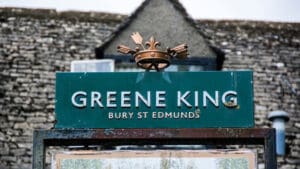
Greene King to sell 150 pubs as operator reshapes estate amid mounting cost pressures

Britain’s second-largest pub operator, Greene King, is set to sell around 150 managed pubs and convert a further 150 into tenanted or franchise venues as part of a sweeping overhaul of its estate strategy in response to mounting economic pressures.
The move, described by chief executive Nick Mackenzie as a “strategic reaction” to a rapidly “changing operating environment”, reflects the deep structural challenges facing the UK hospitality sector, from rising employment costs and persistent inflation to weakening consumer spending.
Greene King currently operates approximately 1,500 managed pubs alongside a further 1,000 leased and tenanted sites. Under the new plan, a significant portion of its directly managed estate will be either divested or transitioned into lower-cost operating models, allowing the group to concentrate investment into what it describes as its “core portfolio”.
The decision comes at a time when pub operators are grappling with a convergence of financial headwinds. Labour cost increases, including higher National Insurance contributions and minimum wage rises, have significantly raised operating expenses, while elevated energy prices and supply chain costs continue to squeeze margins.
At the same time, consumers, facing their own cost-of-living pressures, are cutting back on discretionary spending, particularly in areas such as dining and social drinking.
Although the government has introduced temporary business rates relief for pubs, industry leaders have repeatedly warned that the measures fall short of addressing the scale of the challenge.
Greene King’s own financial performance underscores these pressures. In the 12 months to December 2024, the company reported revenues of £2.45 billion, up 3.2 per cent year-on-year, but swung to a pre-tax loss of £147.1 million. Net debt, excluding lease liabilities, stood at £2.1 billion, with debt servicing costs rising to £110 million.
Central to Greene King’s strategy is a shift away from capital-intensive managed pubs, where the company owns and operates the business, towards leased, tenanted or franchise models, where independent operators run the pubs while Greene King retains ownership of the property.
This transition reduces operational complexity and cost exposure, while providing more stable, predictable income streams through rent and supply agreements.
Mackenzie said the restructuring would allow the company to “maximise the potential and profitability” of its estate while adapting to evolving market conditions.
“The whole market is changing; consumer dynamics are changing, and the economics of running pubs have shifted significantly over the past few years,” he said.
All pubs earmarked for sale or conversion will be placed into a newly created division during the transition period. While no fixed timeline has been set, disposals are expected to take place over the medium term, with a “substantial proportion” of proceeds reinvested into the retained managed estate.
Alongside the estate reshaping, Greene King is also planning to close around 20 pubs, broadly in line with its typical annual closure rate.
While the company has not disclosed how many jobs may be affected, it said it would seek to redeploy impacted staff across its wider business wherever possible. The group currently employs around 40,000 people.
The restructuring follows earlier indications that cost pressures could lead to further efficiencies, including potential job reductions, as the business seeks to restore profitability and improve margins.
Greene King was acquired in 2019 for £4.6 billion by CK Asset Holdings, the investment vehicle controlled by billionaire Li Ka-shing. The current strategy forms part of a broader plan to reposition the business ahead of its 2030 growth ambitions.
The company’s portfolio includes well-known pub brands such as Hungry Horse, Chef & Brewer, Farmhouse Inns and Flaming Grill, as well as brewing operations behind labels including Old Speckled Hen and Abbot Ale.
By concentrating resources on higher-performing sites and adopting a more flexible operating model, Greene King aims to grow market share, enhance customer experience and improve financial resilience in what it describes as an “increasingly dynamic” and challenging environment.
The move is emblematic of a wider shift across the UK pub and hospitality sector, where operators are increasingly prioritising efficiency, capital discipline and adaptability as they navigate a prolonged period of economic uncertainty.
Read more:
Greene King to sell 150 pubs as operator reshapes estate amid mounting cost pressures